Security Guards for Movie Sets in Brooklyn: Access and Patrols
On a Brooklyn film set, security starts at the perimeter, not just at the entrance. A security guard for a movie set in Brooklyn can help manage access, support a secure environment for cast and crew, guide crowds away from active work areas, and observe the location boundary. The coverage needed depends on the site layout, public access, and production activity.
An entrance post can help manage arrivals, but it is only one part of location security. Clear access procedures, attentive crowd management, and consistent perimeter patrols all help keep the set orderly while filming continues.
This article explains how film-set guards coordinate entrances, respond to crowd movement and protect location boundaries. You’ll also learn what to consider when assessing a provider’s approach, including licensing and personnel vetting, so you can identify coverage suited to the production and its setting.
Table of Contents
Film-shoot security providers in Brooklyn and the New York area
For Brooklyn productions, effective security connects set access, public-facing activity, and the location perimeter. Controlled access and a secure environment are identified in SAG-AFTRA Production Safety guidelines as critical components of cast and crew safety.
Film and television security needs vary by production and location. A commercial shoot with a compact crew may need clear procedures at one entrance, while a television production using several connected work areas may require coordinated posts. The schedule, site plan, and movement of cast, crew, and vendors all shape the assignment.
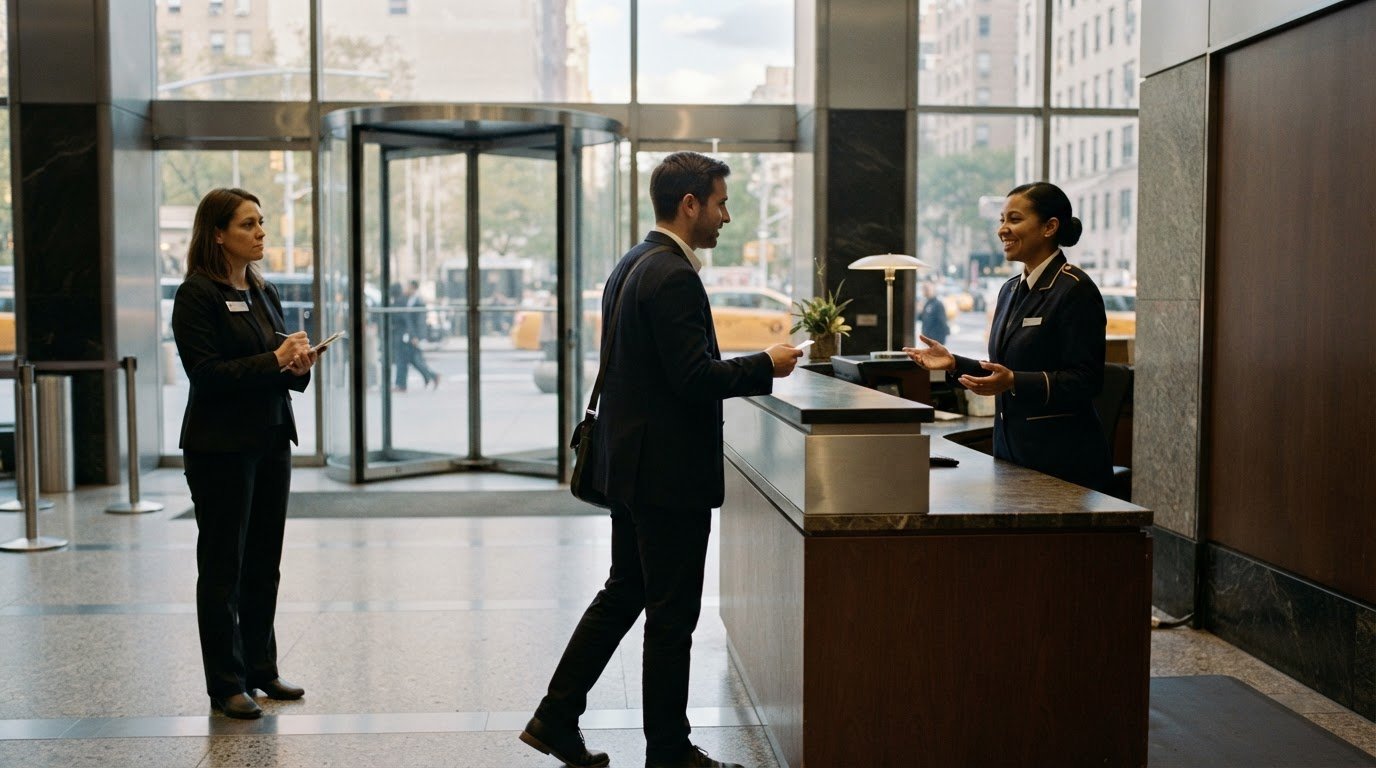
Assess the access plan by tracing one arrival through the set: where does the person enter, how is authorization confirmed, and where are they directed? A defined process should distinguish cast and crew from vendors, visitors, and members of the public. For example, a delivery arriving during a scene change needs a clear point of contact, not access granted solely on familiarity.
Production Types and Set Access Control
Film, television, and commercial productions can share a location, but their access patterns may differ. Security staff should understand the production’s access points and workflow, along with how authorized people are directed. For film and television set access control, an access list and a consistent entry procedure help staff make decisions without interrupting work.
Permits, Rates, and Set Security Risks
Brooklyn film-shoot permits and security requirements are related operational questions, but they are not interchangeable. The production should use its location approvals and site plan to establish where and when filming is authorized, then brief security personnel on those boundaries. Permit conditions depend on the location and production. A security plan should reflect the approved footprint rather than assume that a nearby sidewalk or entrance is part of the set.
Rates for New York City production security depend on the assignment, not on a universal figure. Staffing needs, coverage hours, site layout, and required duties all shape the estimate. A useful scope identifies entrances, expected arrivals, public-facing areas, and patrol needs, linking the proposed hours and posts to the production’s actual requirements.
On a Brooklyn movie set, risks can include unauthorized entry, crowding near active work areas, and confusion during deliveries or location changes. A practical briefing identifies who can authorize entry, where visitors should wait, and how staff should report a concern to production. Security personnel can then follow consistent procedures at each post, while the production contact updates them when the filming footprint or schedule changes.
Access control and crowd management
On a Brooklyn set, access control should distinguish authorized production activity from public movement. Controlled access and a secure environment are critical components of cast and crew safety. Clear entry procedures also help filming stay on schedule when arrivals, deliveries, and scene changes overlap. Each post should align with the production’s working layout. A security guard for a movie set in Brooklyn needs clear instructions for handling these transitions.
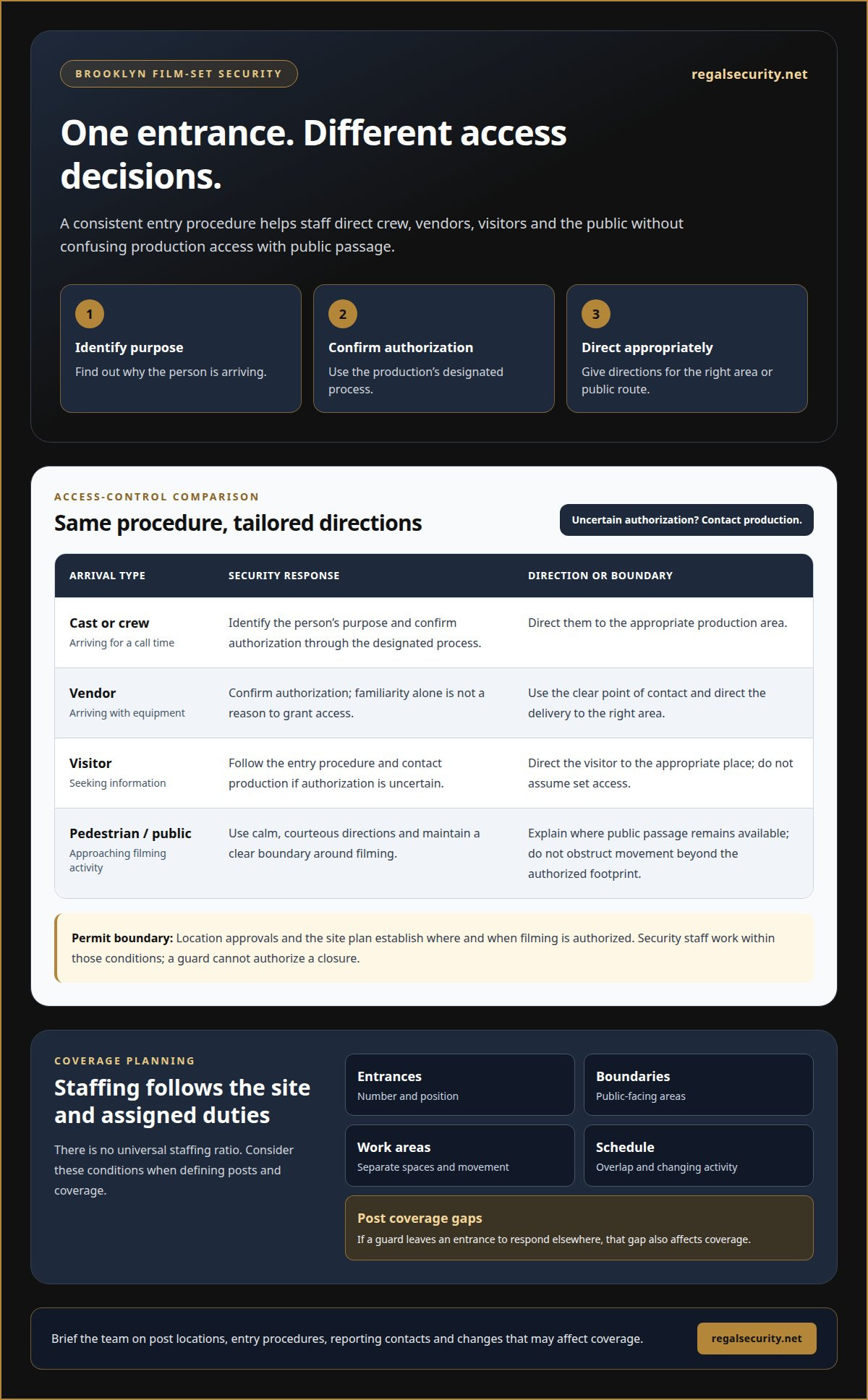
For street closures and crowd control, NYC film permits and location approvals establish the authorized filming footprint and applicable conditions. Security personnel should work within those conditions, maintain clear boundaries, and direct members of the public without implying that a guard can authorize a closure. The production’s designated contact should handle questions about permit terms and coordinate operational changes.
At each entrance, security personnel can follow a consistent sequence: identify the person’s purpose, confirm authorization through the production’s designated process, then direct them to the right area. A crew member arriving for a call time, a vendor bringing equipment, and a visitor seeking information may need different directions. Each post should have a clear way to reach the production contact when authorization is uncertain.
The number of guards needed for a Brooklyn movie set depends on the site plan and assigned duties, not a universal staffing ratio. Consider the number and position of entrances, public-facing boundaries, separate work areas, expected movement, and schedule overlap. If someone must leave an entrance to respond elsewhere, that gap also affects coverage. Define the role of a security guard for a movie set in Brooklyn alongside each post’s responsibilities.
Crowd management should maintain a calm, respectful boundary around filming. For example, when pedestrians approach a camera setup, a guard can explain where public passage remains available and guide them away from restricted production space. Staff should not obstruct public movement beyond the authorized footprint. Clear, courteous directions are more useful than confrontational language, especially when a shoot attracts attention.
Before filming begins, the production contact and security lead should review post locations, entry procedures, reporting contacts, and any changes that could affect coverage. When moving between set areas, they can communicate which access points remain active and where the public may pass. A concise briefing gives each guard the same operational picture and helps prevent conflicting directions.
For productions planning entrance coverage and public-facing boundaries, production access planning can help frame the staffing discussion around the location and assigned duties.
Perimeter patrols and location security
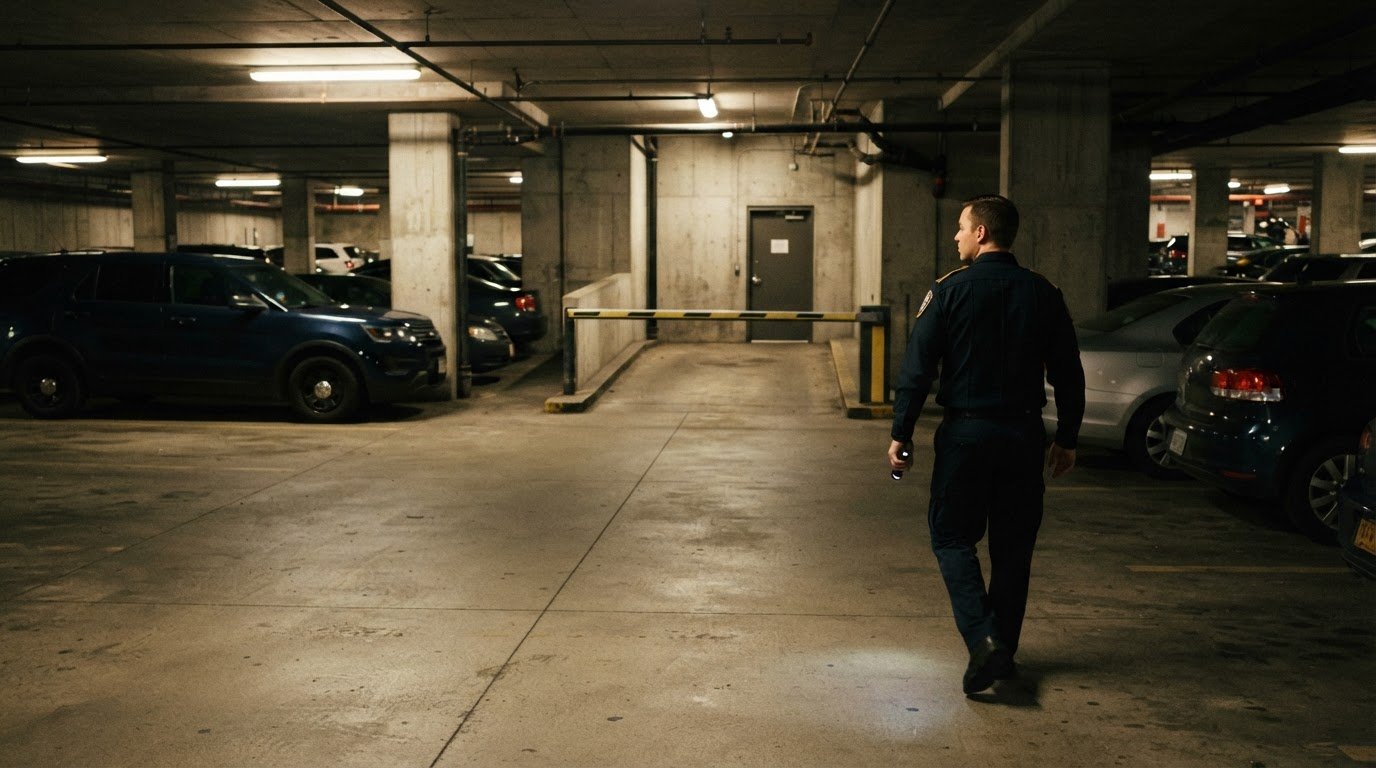
A Brooklyn filming location may include a building entrance, loading area, and outdoor work zone. Perimeter coverage connects these areas, helping production staff notice changes beyond the camera’s immediate vicinity. The plan should mark the set boundary, identify access points, and assign responsibility for each section. A guard inside the set cannot observe every approach from outside.
Before filming, the security lead and production contact can walk the location together. They can identify doors, gates, shared hallways, equipment staging areas, and places where the public can approach. At a converted warehouse, for example, the review might reveal a side entrance used by building tenants. The patrol plan can account for that route without treating the entire property as part of the set.
Patrols are most effective when their purpose and reporting route are clear. A guard can observe whether a boundary remains intact, note an unfamiliar person near staged equipment, and notify the designated production contact. That contact can determine whether the activity is authorized, preventing a routine observation from unnecessarily interrupting filming.
Map the boundary: Mark the filming footprint, adjacent public areas, and shared property entrances.
Assign coverage: Identify which posts watch fixed points and which patrol designated sections.
Set a reporting route: Name the production contact who receives location observations.
Update the plan: Communicate changes when equipment, cameras, or filming areas move.
A location change can alter the perimeter even when the production stays on the same block. If a camera setup moves from a courtyard to a building entrance, the previous patrol route may no longer cover the active work area. The security lead should receive the revised layout, confirm post responsibilities, and brief personnel before coverage shifts. This avoids relying on assumptions from an earlier setup.
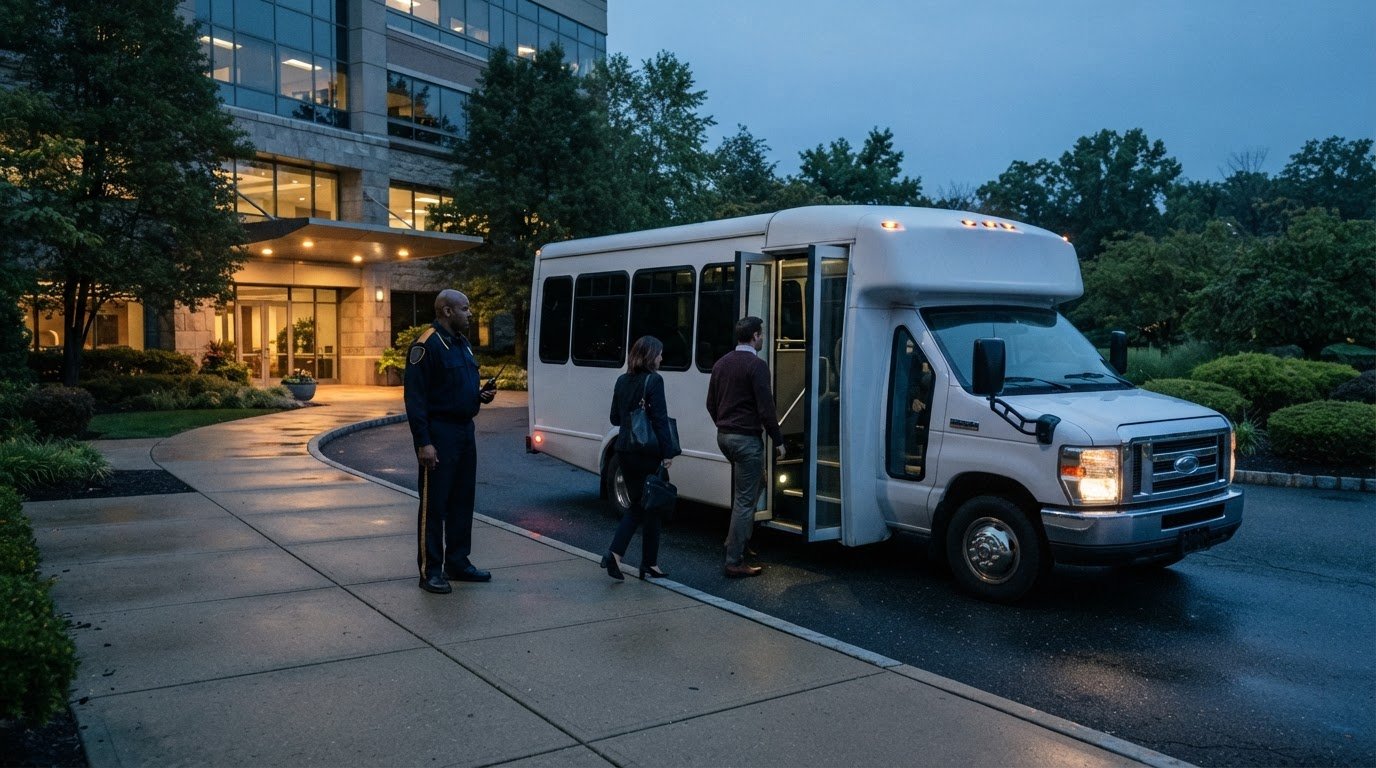
Vehicle Patrol may suit locations where production activity spans separated access points or a broader site. It can complement fixed posts by maintaining visibility between designated areas while entrance personnel continue their assigned duties. The arrangement depends on the map, active filming zones, and reporting needs. A vehicle should not replace coverage at an entrance that needs to remain staffed.
Location security also relies on a clear handoff between production and security. Before a scene begins, the production contact can identify restricted areas, expected deliveries, and planned movement. During filming, guards report observations through the agreed channel. When the set moves, the team receives the updated boundary and patrol assignments. These steps make perimeter coverage specific to the location rather than a generic route.
Guard licensing and vetting
Licensing and suitability are separate parts of production planning. A credential addresses authorization for a role where licensing applies; suitability concerns whether a person can perform the assignment carefully. For a Brooklyn set, the production’s review should connect the role, any applicable credential, and the duties expected at that location. A uniform alone establishes neither qualification.
Start by defining the role. An entrance post may require clear communication and careful attention to authorization, while a perimeter assignment may involve observing changes around the location and reporting them promptly. Document the duties before personnel are assigned. This helps identify the capabilities needed at each post instead of treating every guard position as identical.
Where licensing applies, record the credential type, the name associated with it, and its status in the relevant official record. Keep that review separate from experience or references. A credential check does not show whether someone understands a filming environment, and a polished interview does not establish credential status. Each answers a different question.
Suitability review can focus on role-related evidence and conduct. A production may assess communication, reliability, relevant experience, and the ability to follow set procedures. For example, a guard speaking with a curious passerby should give calm directions without disclosing production details or escalating a routine inquiry. A scenario-based discussion can reveal how a candidate approaches that interaction.
Match duties to credentials: Define the post before reviewing qualifications.
Separate evidence types: Review licensing status, experience, and references as distinct items.
Discuss set scenarios: Consider how candidates handle visitors, deliveries, and changing locations.
Document the review: Keep role criteria and assessment notes together for consistent assignments.
References and employment history can provide context when assessed consistently. For instance, a production can compare a candidate’s stated experience with the duties of a planned entrance post. Past work does not guarantee suitability. Instead, the review helps establish which responsibilities the person has handled and how that experience relates to the current assignment.
Before the shoot, the production should communicate the post’s boundaries, reporting contact, and expected conduct. A guard at a shared building entrance needs to know which areas relate to filming and how to direct questions. The briefing should also explain when to report an uncertain situation rather than make assumptions. Licensing review and thoughtful suitability assessment support a more precise staffing decision.
Hourly rates for event and production security guards in New York City
New York City production security has no single hourly rate that fits every shoot. The price depends on the assignment and is provided after a quote request. Staffing needs, coverage hours, site layout, and assigned duties shape the estimate. A defined scope connects the quote to the work planned.
Start with the coverage plan, not a headline rate. A Brooklyn production might need an entrance post during crew arrivals, followed by continued coverage during filming. Another shoot may require several posts across separate work areas. These assignments have different staffing and scheduling needs, so comparing rates without comparing duties can obscure what is actually being priced.
Coverage hours are another important factor. Describe when coverage begins, which activities it includes, and when the assignment ends. For example, if security is needed during equipment arrival and filming, the quote should reflect that requested coverage period. Schedule or filming-footprint changes can affect the staffing plan and should be communicated before the assignment is finalized.
Location details also matter. A single entrance to a contained interior set presents different coverage needs from a location with multiple approaches and shared public areas. A useful proposal connects each post to a defined responsibility. It should specify whether the estimate covers an entrance presence, perimeter observation, or another stated duty.
For a meaningful comparison, productions can organize the scope around these points:
Location: Describe the site layout, entrances, and areas included in the assignment.
Schedule: State the requested coverage period and known filming or setup changes.
Posts: Identify where personnel are needed and the purpose of each position.
Responsibilities: Explain the duties expected at each post and how they relate to production activity.
This detail helps distinguish a lower estimate based on fewer hours or posts from one covering broader duties. It also gives the production a practical basis for adjusting the scope. If a public-facing entrance no longer needs coverage, for example, the production can discuss how that change affects the assignment rather than treating the original estimate as a universal hourly benchmark.
Before approving a quote, review how the proposed coverage aligns with the schedule, location, and assigned duties. A clear scope supports a more informed decision about production security spending. Request a production security quote based on your location and coverage needs.
Regal Security
Regal Security helps productions consider on-site security needs in relation to location layout, access points, and filming schedules. Its services include Unarmed Security Officers, Concierge Services, Vehicle Patrol, and Executive Protection, supporting different aspects of a production’s security plan. The appropriate arrangement depends on the duties and setting, whether a shoot needs a professional presence at an entrance, patrol coverage around a location, or support for an executive.
For a production preparing to film in Brooklyn, Regal Security can discuss the assignment in relation to its planned coverage and operational needs. Contact Regal Security to discuss your production’s security requirements.
Set the next production up with a clear plan
A useful next step is to turn your filming schedule into a concise security brief. Note the location, active filming areas, anticipated movements, and any changes that could affect coverage. This gives the conversation a practical starting point and helps align the assignment with the production’s priorities.
Choosing a security guard for a movie set in Brooklyn begins with defining the role the production needs covered. A focused discussion can clarify how the location and schedule shape the assignment, without relying on a generic plan. Regal Security can help you consider coverage suited to your production’s requirements.
Contact Regal Security about set coverage and take the next step toward a well-planned shoot.
Frequently Asked Questions
What security guard services are available for movie sets in Brooklyn, NY?
Regal Security provides security services productions can consider alongside their location and staffing plans. Its offerings include Unarmed Security Officers, Concierge Services, Vehicle Patrol, and Executive Protection. A production may need a professional on-site presence as cast and crew arrive, or patrol coverage suited to its location. The right scope depends on the assignment; these offerings are not a guarantee of film-specific coverage.
Which film production security companies serve Brooklyn?
Regal Security serves clients in Brooklyn and across New York City, New Jersey, Manhattan, Queens, the Bronx, Staten Island, Long Island, Nassau County, Suffolk County, Westchester County, Rockland County, and Orange County. Its listed services address general security needs for clients and locations. Productions can frame their requirements by describing the site, schedule, and duties involved, then assess whether the proposed scope fits their production’s needs.
What licensed and insured security guard requirements apply in New York State?
Licensing and insurance are separate matters, and applicable requirements depend on the role and arrangement. For a production, distinguish credentials relevant to the assigned guard from documentation relating to the security business and filming location. A practical review records who is responsible for each requirement and how it relates to the assignment. Do not treat a guard’s credential as proof of insurance, or insurance documents as proof of licensing.
What should I look for when hiring a security guard for a film production in Brooklyn?
Look for a defined assignment, role-relevant qualifications, and a clear reporting structure. For example, the production brief can specify who receives a guard’s report if an unfamiliar person approaches a private holding area. It should also identify who can revise post instructions if filming moves indoors. These details show whether the proposed staffing plan fits the shoot’s actual workflow, rather than relying only on a general description of security experience.
How can I compare film-set security guard services in Brooklyn?
Compare assigned duties and coverage scope, not just the service label. A fixed on-site presence addresses different needs from Vehicle Patrol, while Concierge Services may suit a location that needs a welcoming, orderly arrival experience. For each proposal, map the stated duties to the production’s schedule and layout. This makes coverage differences easier to understand without assuming that similarly named services include identical responsibilities.