Residential Patrol Services in Suffolk County for Neighborhoods
Neighborhood coverage is strongest when patrols match the property’s layout and hours of concern. Residential patrol services in Suffolk County can include marked vehicle patrols, uniformed guards, mobile coverage of streets and shared areas, and overnight or 24/7 watch, according to the coverage plan.
Before arranging coverage, it’s reasonable to ask whether security guards are licensed and insured. This guide explains what residential patrol services in Suffolk County can involve, how mobile coverage serves shared neighborhood spaces, and how to assess a security provider’s credentials alongside your property’s practical needs.
You’ll also learn how overnight and continuous coverage differ, what shapes a patrol plan, and how unarmed officers and vehicle patrols can provide a visible, consistent presence. The goal is to help your community assess its options with confidence and care.
Table of Contents
Need Security Service Assistance?
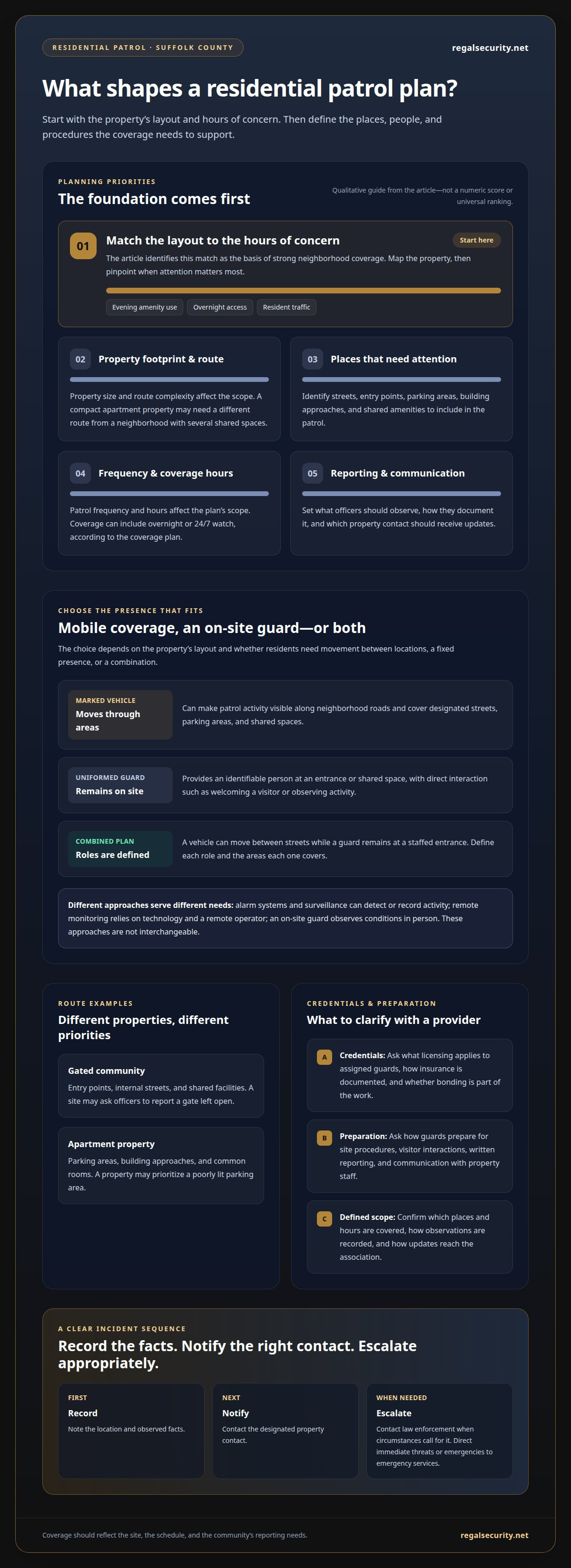
Residential patrol plans work best when they reflect a neighborhood’s layout, shared spaces, and reporting procedures. For Suffolk County communities, define what officers should observe, how they should document incidents, and who should receive updates.
Community Patrols and Amenity Oversight
Community patrols can cover residential streets, entrances, parking areas, and shared amenities. Depending on the property, a route might include a clubhouse, pool entrance, walking path, or recreation area. Identify which spaces need attention and what officers should report, such as an unlocked door or damage to shared property.
Set a clear communication sequence for incidents: record the location and observed facts, notify the designated property contact, and contact law enforcement when circumstances call for it. Direct immediate threats or emergencies to emergency services. Written procedures help residents, property staff, and patrol personnel distinguish routine maintenance concerns from urgent safety matters.
Gated Communities and Apartment Properties
At a gated community, coverage can focus on entry points, internal streets, and shared facilities. At an apartment property, patrol routes may include parking areas, building approaches, and common rooms. Each site has a different layout, so shape the plan around its access arrangements and resident traffic.
For example, an association may want officers to report a gate left open, while an apartment manager may prioritize a poorly lit parking area. These observations can help property contacts address recurring concerns. Patrol personnel should follow site procedures and direct access or enforcement concerns to the appropriate property contact or law enforcement channel.
Local Expertise and Community Relations
Familiarity with Suffolk County neighborhoods helps patrol personnel understand local layouts, from residential islands with a single entrance to communities with connected streets. Calm, respectful communication with residents, visitors, and property staff is equally important. A consistent reporting format makes it easier to identify where an incident occurred and whom it affects.
A homeowners association or neighborhood can hire a patrol company by identifying its property, coverage priorities, and preferred communication contact, then requesting a quote. The association can describe concerns such as amenity oversight, access points, or incident reporting so the proposed coverage reflects the site.
Patrol Frequency and Coverage Hours
Patrol frequency and coverage hours affect the scope of a plan because they determine when and how much coverage the property needs. Property size, route complexity, and the areas included also shape the quote. To discuss a plan for your property, outline these factors when you request a quote.
To define a schedule, map the locations that need attention and identify periods of concern, such as evening amenity use or overnight access. A neighborhood with several shared spaces may need a different route from a compact apartment property. Clear priorities help align patrol activity with the community’s practical needs.
Marked patrol vehicles and uniformed guards
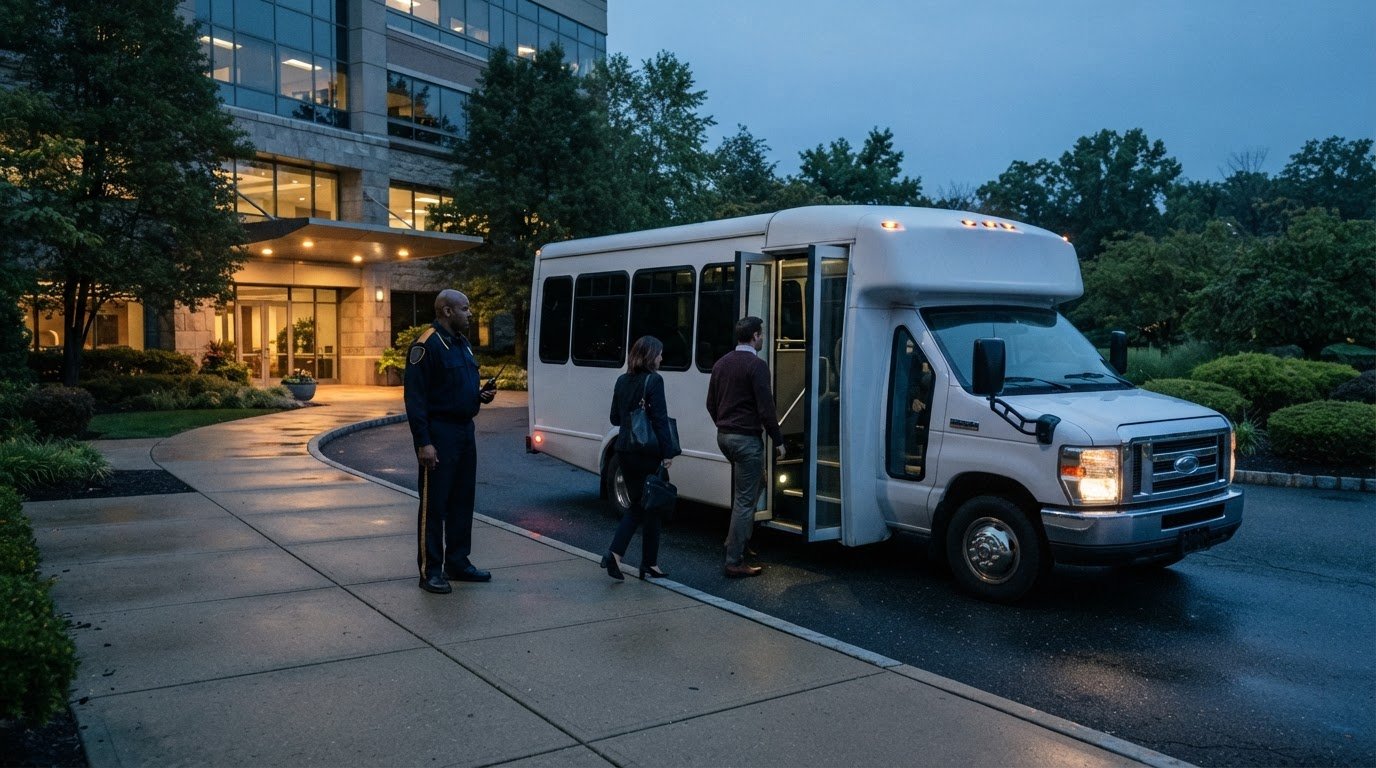
A marked vehicle makes patrol activity visible along neighborhood roads, while a uniformed guard provides an identifiable person on site. The choice depends on the property’s layout and whether residents need mobile coverage, a fixed presence, or both.
Residential patrol services in Suffolk County can combine vehicle rounds with uniformed guards at entrances or shared spaces. For example, a vehicle can move between streets while a guard remains at a staffed entrance. The plan should define each role and the areas covered.
Mobile patrols provide a professional presence that moves through designated areas. Unarmed guards remain on site, while armed coverage involves a different level of response; neighborhood watch relies on residents’ participation. Choose an approach based on the community’s needs and responsibilities.
Visible presence and technology
A marked patrol vehicle can make security activity visible without placing a guard at every location. Uniformed security officers add direct interaction, such as welcoming a visitor or observing activity near a clubhouse. Consider whether visibility, personal contact, or movement between locations matters most.
Alarm systems and surveillance can detect or record activity, but they do not provide the visible human presence of a guard. Virtual guarding and remote monitoring rely on technology and a remote operator, while an on-site guard observes conditions in person. These approaches address different needs and are not interchangeable.
Credentials and preparation
Before choosing a provider, ask what licensing applies to assigned guards, how insurance is documented, and whether bonding is part of the work. Request clear documentation and an explanation of the guard’s role at the property. These questions help distinguish credential evidence from broad assurances.
Training and qualifications should match the assigned duties. Ask how guards prepare for visitor interactions, site procedures, written reporting, and communication with property staff. For example, an apartment entrance post may require different site instructions from a mobile patrol covering residential roads.
Questions that clarify the plan
When comparing services, identify which locations and hours the patrol covers, how officers record observations, and how updates reach the association. Also clarify who handles an incident and how officers communicate with local law enforcement when appropriate. Specific answers explain what the service involves more clearly than a label alone.
For communities weighing on-site personnel against vehicle coverage, residential security coverage can be framed around the property’s access points, shared spaces, and preferred presence. A defined scope makes the comparison practical, whether the priority is a marked vehicle, a uniformed guard, or coordinated coverage.
Mobile patrol services for residential properties and neighborhoods
Residential patrol services in Suffolk County can be planned around a property’s layout, access points, and coverage priorities. A mobile route connects selected locations through a defined purpose and clear site instructions.
Residential patrol services in Suffolk County may include vehicle rounds and uniformed coverage, depending on the property’s needs. Start by identifying which locations officers should cover and how they should report observations.
Residential Mobile Patrol Coverage
Mobile coverage uses a patrol vehicle to move between designated parts of a residential property. A mobile patrol officer position in Plainview, New York, lists community streets, cul-de-sacs, parking areas, the clubhouse, and other common areas. These examples show how a route can connect thoroughfares with shared destinations.
For your site, map its boundaries and identify priority locations, including entrances and amenities. A long residential road may call for a different route from a compact complex with one access point. Specify the areas officers should observe and the property contact who receives relevant reports.
Mobile Patrol Officer Duties
Mobile patrol officers follow assigned routes, observe site conditions, and document relevant findings. For example, an officer might record a vehicle obstructing an access lane or damage near a shared facility. A factual report helps property representatives understand the location and nature of the concern.
Site instructions should define patrol areas, reporting procedures, and escalation contacts. They should distinguish routine observations from urgent incidents and explain how officers communicate with property staff. A patrol provides an on-site presence as it moves through its route; it does not replace emergency services or law enforcement.
Neighborhood Patrols
A neighborhood route can link streets, entrances, and shared areas according to how residents use them. For example, patrol coverage may pass through residential roads before reaching common facilities. Let the community’s priorities, not convenience alone, determine the route.
Property representatives can identify recurring concerns by location and explain what officers should report. Clear details turn a broad request into practical site instructions. Identify the reporting contact, too, so observations reach the right person.
Mobile patrol planning can differ across Suffolk and Nassau counties because properties have distinct layouts and access arrangements. Make each route specific to the property being served, with its boundaries and priorities clearly defined.
To prepare a plan, describe the property’s entrances, streets, shared areas, and preferred reporting contact. These details help establish a purposeful route and a useful process for communicating observations throughout the neighborhood.
Overnight and 24/7 residential watch
Overnight watch focuses coverage on nighttime conditions, while a 24/7 plan extends coverage across daytime and nighttime hours. The right schedule depends on the property’s access points, resident activity, and areas requiring a human presence.
For example, a gated community may prioritize its entrance, internal roads, and shared facilities after dark. An apartment property may focus on lobby access, parking areas, and building approaches. Identifying these locations first makes the plan specific to the site.
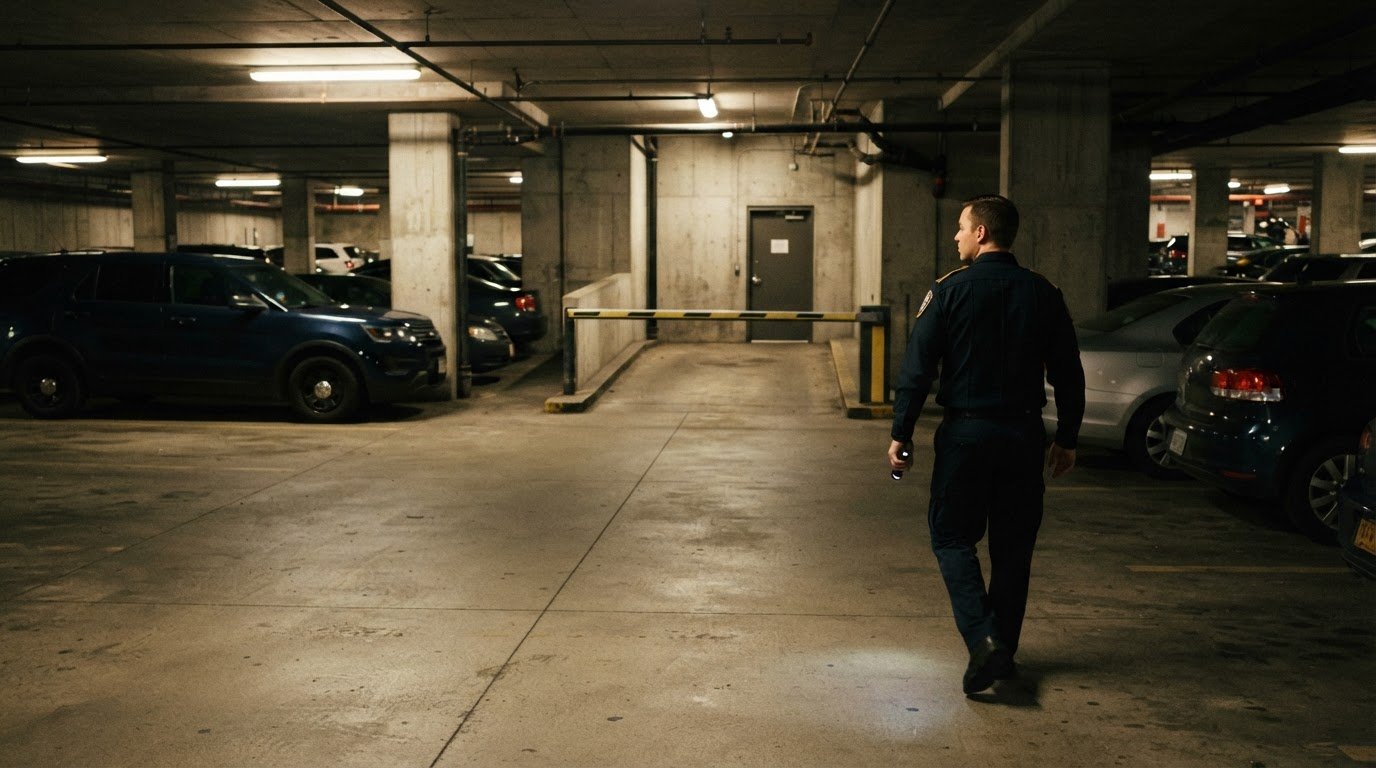
Overnight coverage can suit properties where activity changes after residents return home. A defined patrol route or guard post can cover entrances and common areas, document relevant conditions, and follow established instructions. The plan should explain how observations reach the property contact and how urgent concerns are escalated.
A 24/7 watch requires a schedule that accounts for continuous coverage and orderly staff handovers. Each handover should communicate current site conditions, outstanding concerns, and any instructions affecting access control. Without a clear transition, important details, such as a temporary entrance procedure, may be missed between shifts.
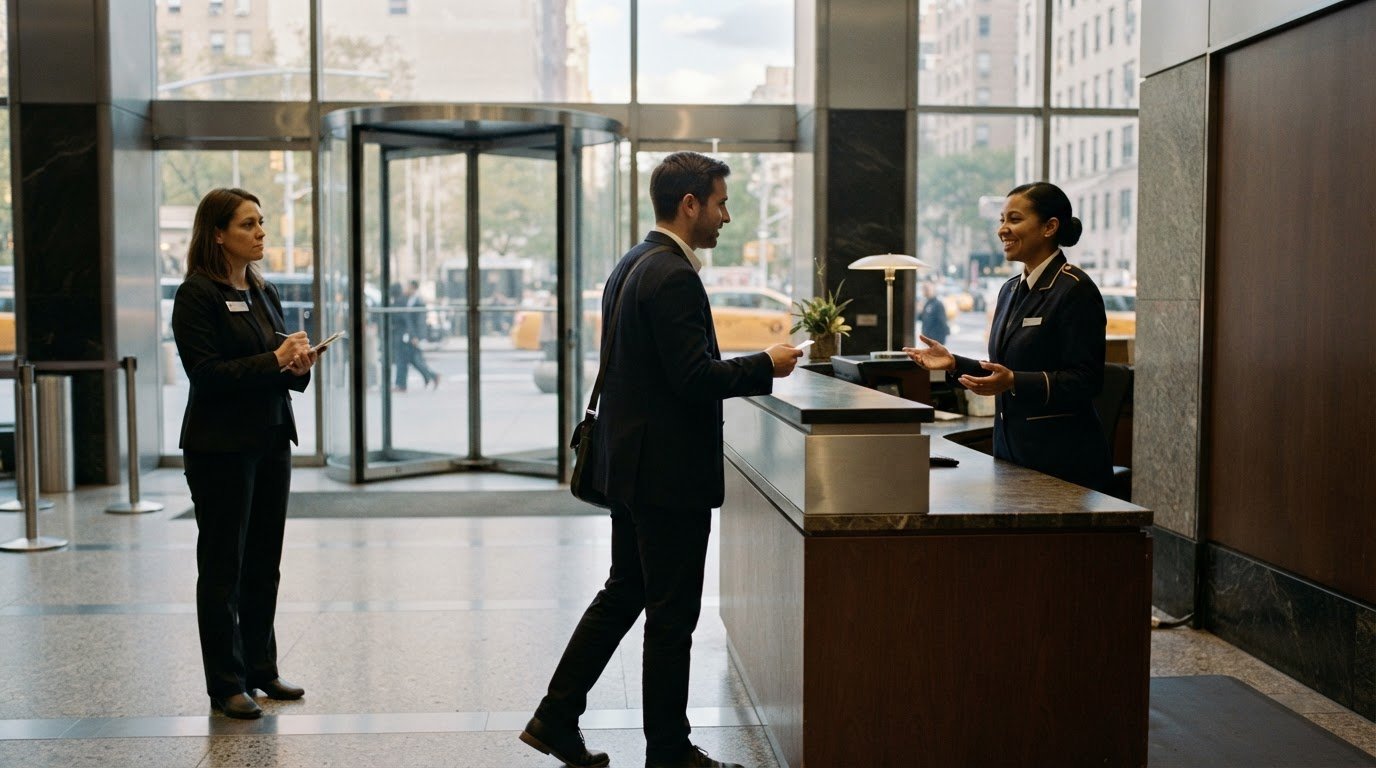
Coverage also requires balancing security duties with hospitality. A guard may welcome a visitor, direct a delivery, or explain an entry procedure while remaining attentive to the site. In a residential setting, professional communication matters because residents, guests, and service personnel use the same entrances.
To shape a tailored plan, property managers can document the operating schedule, locations of concern, and reporting contact. They can distinguish routine observations from incidents requiring prompt escalation, too. These decisions clarify whether overnight coverage or a broader watch better fits the property’s daily pattern.
For gated communities, access procedures should explain how residents, visitors, and deliveries enter. For example, instructions can identify which entrance serves visitors and where a guard should direct questions. The plan should also explain how unusual access concerns are recorded and communicated to the appropriate property representative.
Properties across the region vary in layout, resident routines, and shared amenities, so one schedule will not suit every site. A community with evening clubhouse use may need attention around that space, while another property may prioritize vehicle and pedestrian entrances. Set coverage hours to reflect actual site activity.
Make the service easier to manage by setting clear responsibilities before coverage begins. Identify who receives routine reports, who handles property questions, and how urgent events are escalated. With these instructions in place, overnight or continuous coverage can fit the property’s access procedures and resident experience.
Suffolk County service areas
A useful service-area plan starts with the specific Suffolk County property, not a broad county label. Its streets, entrances, shared spaces, and access routes determine where patrol coverage is directed and how officers move through the site.
Map the property boundary and identify each location included in the assignment. A residential community, for example, may have internal roads, a clubhouse, parking areas, and multiple entrances. A dedicated route makes these priorities explicit and helps officers distinguish the coverage area from nearby streets or adjoining sites.
Next, describe how residents and visitors approach the property. Note gates, visitor entrances, delivery access, and routes connecting separate sections. If one entrance serves residents while another leads to shared amenities, include both in the site plan. Clear geography helps officers locate observations and communicate them precisely.
Suffolk County properties differ in layout and daily use, so coverage should reflect each site. A compact apartment property may center on building approaches and parking, while a larger residential community may need a route between several streets and amenities. These are planning examples, not a claim that every property needs the same coverage.
Before coverage begins, provide a map or written description that defines the assignment’s limits. Designate a contact for reports and clarify which areas need attention. For example, the plan might prioritize a shared entrance during busy visitor periods, then include community roads and common areas on the patrol route.
Keep instructions practical and current. If a gate closes, a route changes, or a shared area becomes unavailable, updated directions help officers follow the intended coverage. A clear process for communicating changes also helps property staff understand which locations remain part of the assignment.
A local coverage description should go beyond saying “throughout Suffolk.” Specify the locations, route, and reporting contact involved. This detail gives residents a clearer understanding of the service area and distinguishes a defined assignment from a general regional statement.
To discuss coverage for a Suffolk County property, call 631-414-7513 or discuss your property’s patrol coverage. Share the property location, its entrances, and the areas requiring attention. Those details provide a practical starting point for defining a tailored patrol area.
Regal Security: Concierge Services
Regal Security provides Concierge Services for residential properties seeking a professional, attentive presence for residents and visitors. When a neighborhood’s priorities extend beyond a reception-style role, Vehicle Patrol and Unarmed Security Officers offer additional options for mobile or on-site coverage. The right fit depends on the property’s layout, access points, and preferred level of presence.
For example, a property may prioritize a welcoming point of contact, mobile patrols through shared areas, or an officer assigned to the site. Defining these needs helps shape an approach around the community instead of relying on a one-size-fits-all plan.
Contact Regal Security to discuss residential coverage for your property.
Set a Clear Direction for Your Neighborhood
A residential patrol plan in Suffolk County should stay aligned with how a property is used. As entrances, shared facilities, or resident routines change, the community can revisit its priorities and update site instructions. This keeps the plan relevant and prevents outdated assumptions from guiding coverage.
For a practical next step, the association or property manager can gather the details that shape the assignment: the areas of concern, desired coverage periods, and preferred reporting contact. Bringing those decisions together helps turn a general security concern into a focused conversation about residential patrol services in Suffolk County.
Regal Security offers services to support different residential needs, including Concierge Services, Vehicle Patrol, and Unarmed Security Officers. A conversation can clarify which approach best fits the property’s priorities and daily operations.
Contact Regal Security to discuss patrols and take a considered next step toward a more clearly planned neighborhood presence.
Frequently Asked Questions
Are Your Security Guards Licensed and Insured?
Licensing and insurance are separate credentials, and both should be clearly established for a residential assignment. A license relates to authorization for applicable security work; insurance addresses covered risks under a policy. Before coverage begins, review documentation for the provider and assigned personnel, including the scope and dates shown. This helps the association understand what the documents cover instead of relying on a general assurance.
Which Suffolk County towns and neighborhoods do residential patrol companies serve?
Coverage should be identified by the property’s actual location and assignment, not assumed from a countywide label. Regal Security serves Suffolk County and Long Island, as well as New York City, Manhattan, Brooklyn, Queens, the Bronx, Staten Island, Nassau County, Westchester County, Rockland County, Orange County, New Jersey, and Pennsylvania. For a neighborhood plan, specify the property address and boundaries.
What services do residential patrol officers provide, including vehicle patrols and alarm response?
Residential coverage can involve Vehicle Patrol, Unarmed Security Officers, and Concierge Services, depending on the property’s needs. A patrol plan can specify how officers handle information from property staff about an alarm, including the designated contact and escalation steps. Patrol coverage is distinct from alarm installation or remote monitoring, so define the community’s alarm process separately.
What licenses and insurance are required for security patrol companies in New York?
Requirements depend on the security work and the roles involved, so a general statement cannot establish every applicable obligation. For a New York assignment, distinguish the company’s authorization from individual credentials, then review insurance documents for the named entity, coverage period, and scope. These records help clarify what applies to the agreement. Do not treat insurance documentation as proof of licensing, or a license as proof of insurance.
What are the risks and limitations of residential patrol services, and who is responsible during an incident?
Mobile patrols move through assigned areas, so an officer is not physically present at every point at once. Patrols also do not replace emergency services or law enforcement. The property agreement and site instructions should identify who receives routine reports, who contacts emergency services, and how officers communicate observations. For example, an association can designate its property manager to receive non-emergency incident reports.
How quickly can Suffolk County patrol services respond to alarms or suspicious activity?
Response timing depends on the patrol schedule and location, access to the property, and the information provided about an event. A report that identifies an entrance, building, or street gives personnel a clearer destination than a general alert. Communities should also define who receives alarm notifications and how urgent situations are escalated. For immediate danger, contact emergency services directly rather than relying on a patrol.