Preventing Package Theft in NYC Apartment Buildings Through Better Access Control
Preventing package theft in an apartment building in NYC starts with controlling who can enter and where deliveries are left. Even with building access controls, packages left in an open lobby can remain vulnerable to theft.
It’s understandable to focus on the delivery itself, but building access and the package handoff matter just as much. Residents and management can reduce opportunities for theft by securing entry points, setting clear delivery procedures, and directing packages to controlled spaces.
This article explains why package theft happens in apartment communities and how access control can address weak points between the building entrance and a resident’s door. It also covers staffed reception, package rooms and lockers, resident habits, and practical steps to take when a delivery goes missing.
Table of Contents
Common package security misconceptions and mistakes
NYC landlords aren’t required to provide package lockers or concierge services if the building doesn’t already offer them. To improve lobby and package-room security, maintain secure entry points, limit access to delivery areas, and establish clear package procedures.
Limits of Security Cameras and Live Monitoring
A camera can document activity, while live monitoring can let someone observe events as they unfold. Neither replaces a controlled entrance or secure package storage. NYC building management may post signs stating that entrances and lobbies are monitored, but signs alone don’t establish that cameras are functioning. Residents should distinguish visible equipment from reliable access control and report concerns to management.
Risks of Open Mailrooms
An open mailroom leaves packages accessible to people who enter the building, including visitors who aren’t collecting mail. Even a locked front door may not protect parcels once someone is buzzed in. Packages left near a lobby entrance can also be easy to remove without a managed handoff. Clear entry procedures and restricted mailroom access address these weak points.
A common mistake is assuming that a camera sign means a building has working surveillance, or that a secure entrance protects every delivery inside. NYC rental buildings with three or more units must provide secure mailboxes, an intercom, secure doors, and a building key. Those requirements don’t mean the building must provide a dedicated package room or locker.
A secure package room can reduce exposure when it’s part of an established package-management system. The room should have controlled access, and residents should know how deliveries are received and retrieved. Without clear procedures, parcels may still accumulate in a shared space or remain unclaimed. Management can explain where carriers should leave deliveries and how residents are notified.
For a practical improvement, management can review the route from the building entrance to the delivery area. Repair broken locks and intercoms, keep doors secure, and restrict access to package storage. According to New York City Department of Housing Preservation and Development, building managers, superintendents, or owners should immediately repair broken locks or intercoms. Residents can help by not buzzing in unfamiliar people and following posted delivery procedures.
Residents should not assume that a building’s security cameras are functioning. Residents shouldn’t treat a camera’s presence or a notice about monitoring as proof that images are being recorded or watched. If camera coverage matters to a resident, they can ask management whether the equipment is operating and what areas it covers, then report any apparent problem. A clear answer helps set expectations without confusing a camera with a guarantee against theft.
Management can keep camera information in perspective when explaining package procedures. A camera may help document an incident, but it cannot stop an unauthorized person from entering or make an unattended parcel inaccessible. Residents should still follow the building’s delivery process, avoid admitting unfamiliar people, and raise concerns about doors, intercoms, or package storage. Treating surveillance as one part of a broader security approach helps avoid relying on equipment alone.
Why does package theft happen?
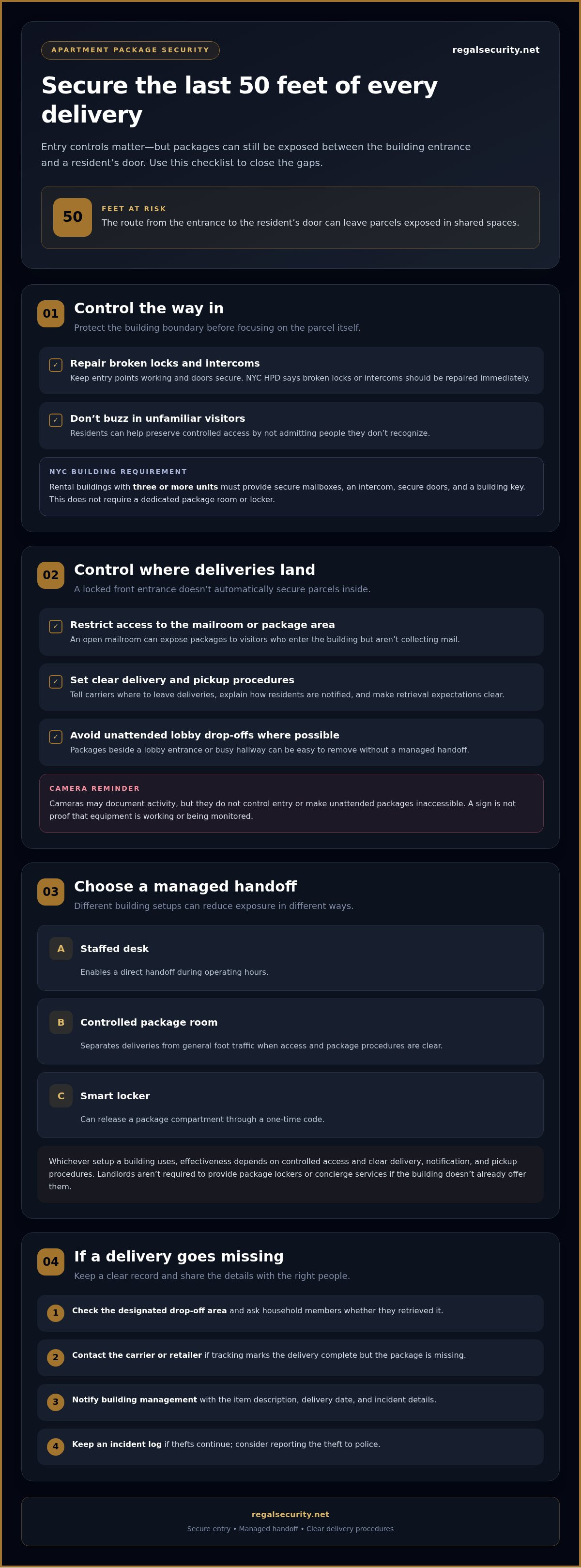
Packages are vulnerable when a delivery reaches a shared lobby or hallway but nobody takes responsibility for the handoff. The last 50 feet inside an apartment building, from the entrance to a resident’s door, can leave parcels exposed to people moving through common areas.
Lease terms may exclude a landlord’s liability for lost or stolen deliveries, unless a door lock has been broken for an extended period. A New York City landlord notified of criminal activity at the property may be obligated to take reasonable safety precautions. Check the lease and report repeated incidents to management, including the dates and details.
Smart lockers, staffed desks, and secure mailrooms can reduce exposure by limiting who can reach delivered parcels. A smart locker can release a package compartment through a one-time code, while a staffed desk enables a direct handoff during its operating hours. Their effectiveness depends on controlled access and clear procedures for delivery, notification, and pickup.
Building design shapes the opportunity for theft. A lobby that opens directly onto a public entrance, has no supervised handoff, or places parcels beside a busy hallway gives visitors easy access. A package room with a locked entrance separates deliveries from general foot traffic. Buildings without room for lockers can still make the delivery point less exposed through access rules and prompt retrieval.
For USPS, UPS, FedEx, and Amazon orders, use the delivery controls shown for that shipment. Choose an available option such as an in-person signature, safe-place instructions, scheduled delivery, or pickup location. For a high-value or difficult-to-replace purchase, a workplace, post office, or retail pickup point may be preferable to a lobby drop-off.
Tracking helps residents anticipate arrival, but a delivery alert doesn’t secure a parcel. Review tracking details, coordinate with household members, and retrieve packages promptly when practical. If a delivery is marked complete but missing, check the designated drop-off area and ask household members first. Then contact the carrier or retailer and notify building management with the item description and delivery date.
Renters insurance may cover a stolen package, though the deductible can make a claim impractical. Keep the order confirmation and delivery record while reviewing the policy terms. If thefts continue, tenants can keep an incident log and report the theft to police when other prevention efforts haven’t worked.
Choose a handoff that suits the purchase rather than using the same option for every order. Apartment-door delivery may suit everyday, lower-value purchases when prompt retrieval is likely. A parcel locker can suit deliveries that benefit from controlled access and electronic notifications.
A controlled-access point, such as a staffed desk, locked parcel room, or self-service smart locker, can replace open porch or lobby drop-offs. Smart lockers can use a one-time code to control access to a package compartment after delivery. Monitoring tracking information before a package arrives is another useful security habit for apartment residents.
Apartment building access control
Access control governs who can enter a building and reach shared areas. Secure mailboxes, an intercom, secure doors, and a building key can help establish a baseline for entry. These safeguards establish a baseline for entry, but residents and management still influence how visitors move through the lobby and toward delivery areas.
A working intercom lets residents identify visitors before granting entry. A building sign can remind tenants not to let unfamiliar people inside, but the reminder matters only when residents follow it. Don’t buzz in someone you don’t recognize simply because they’re carrying a delivery bag or following another tenant through the entrance. Anyone admitted can reach the building’s shared spaces.
That distinction matters in apartment buildings with frequent deliveries. A carrier may need entry to complete a drop-off, but a visitor who enters behind them can also reach the lobby. Residents should avoid holding a secured entrance open for unknown people. Building management can make delivery expectations clear, including where parcels should be left and how carriers should contact residents.
Access control also depends on the condition of entry hardware. A door that fails to latch, a broken lock, or an intercom that cannot connect residents to visitors weakens the building’s access boundary. According to the New York City Department of Housing Preservation and Development, building managers, superintendents, or owners should immediately repair broken locks or intercoms to secure buildings. Residents can report the specific fault and its location to management.
Management can review the full route from the street entrance to the package area. Check whether the lobby door closes securely, whether the intercom works, and whether delivery instructions direct carriers away from open hallways. A secure front door alone doesn’t restrict access to packages once a visitor has entered. The delivery area needs its own clear access rules, especially when parcels are left in a shared room.
Residents also contribute to a consistent system. Follow posted building procedures, avoid admitting unknown visitors, and tell management when a lock or intercom stops working. If a package disappears after an entry-control problem, record the date, location, and malfunction when reporting it. Those details help management identify whether the weakness involves a door, an intercom, or the handoff process.
Effective access control isn’t a single device. It combines functioning entry hardware, attentive residents, and clear delivery practices. When reviewing procedures, identify where an unfamiliar visitor could travel from the entrance to a package. That route reveals which access point needs attention first.
Door attendants and concierge services
A door attendant or concierge can provide a clear package handoff at a staffed desk. In an NYC building with staffed business hours, a leasing office or concierge can accept deliveries and keep them from being left just inside the entrance. This arrangement works best when residents know where to collect parcels and carriers know where to bring them. A staffed desk also gives residents a defined place to ask about a delivery.
Coverage matters. A concierge can accept packages only while the desk is staffed and under the building’s procedures. For a delivery arriving outside those hours, residents may need another arrangement, such as scheduling delivery for when they’re home or selecting a pickup location. Clear hours and instructions help prevent carriers from leaving packages in an unattended lobby when nobody can receive them.
Acceptance procedures should be simple and consistent. Building management can designate a delivery point, tell residents how to collect items, and establish how staff handle parcels addressed to absent tenants. For example, a written log can record the recipient’s name and the arrival date. A consistent record helps staff respond when a resident asks whether a package reached the building.
Concierge services can support both hospitality and access control. A desk attendant can direct a carrier to the designated handoff area rather than an open hallway. Staff can also remind visitors to use the intercom instead of following another person inside. These actions clarify the delivery route, though the desk should not be treated as a substitute for functioning locks or secure storage.
Buildings without a staffed desk can still establish a delivery process. Management can explain whether carriers should use a package room, contact residents, or leave items at an approved location. Residents can share those instructions with household members and use tracking information to plan retrieval. An orderly process reduces confusion when several deliveries arrive close together.
NYC landlords aren’t required to provide delivery lockers or concierge services if those services aren’t already provided in the building. Residents should learn the building’s existing package procedures rather than assume a desk or locker will be available. If the building has a concierge, ask where accepted packages are held and how residents are notified under the established process.
For management, the decision depends on delivery volume, desk coverage, storage space, and the building’s layout. A staffed handoff may suit a building with an existing reception desk, while a building without one may need a designated room or another defined procedure. Whatever approach is used, residents and carriers need clear instructions about where packages go and how they’re retrieved.
Package theft in apartment communities
Package theft affects more than a single resident when deliveries share a lobby, hallway, or mailroom. A survey of 1,000 renters found package theft was the most commonly reported crime in their apartments. That community-wide impact matters: repeated losses can weaken residents’ confidence in shared spaces and create tension between neighbors, carriers, and building management.
Delivery patterns can make the problem more visible during busy periods. Package theft is reported to spike during the holiday season and around Black Friday, Prime Day, and Cyber Monday. Apartment communities may receive dozens or hundreds of packages every day, so even a short delay before pickup can leave parcels exposed. Residents can coordinate household deliveries and retrieve items promptly when practical.
Shared responsibility is useful, but it needs a clear process. Residents can learn the building’s package procedures, tell household members where deliveries should go, and look out for neighbors without confronting suspected thieves. If thefts recur, keep a log of delivery dates, missing items, and locations. A dated record helps management see whether incidents cluster around one entrance or delivery area.
After a package disappears, write to building management with a description of what went missing and the date of the theft. Keep the carrier’s delivery notice and order details, then contact the appropriate carrier or retailer. If prevention efforts don’t work, residents can report package theft to police. A police report and incident log can help document a pattern and support a request for repairs or other reasonable safety measures.
Residents can also reduce unattended deliveries by choosing an option suited to each purchase. The NYPD suggests requesting an in-person signature or shipping packages to a workplace or someone who will be home. A post office box or pickup locker offers another delivery location. For everyday items, tracking and prompt retrieval can help; for valuable or hard-to-replace purchases, a staffed or offsite pickup point may be more appropriate.
Community routines should make reporting and follow-up straightforward. Residents can share recurring concerns with management, while management can communicate delivery procedures and document reported incidents. If a camera or entry point appears damaged after a theft, describe the specific issue and location in writing. Clear records help distinguish a one-time loss from a recurring access problem and direct attention to the relevant part of the building.
For a considered review of your building’s package-security approach, strengthen your package-security plan with a focus on resident routines, delivery procedures, and shared spaces.
Regal Security: Unarmed Security Officers
Regal Security provides Unarmed Security Officers for residential properties seeking a professional on-site security presence. When package losses point to gaps in lobby oversight or entry management, an officer can complement the building’s access procedures and resident communication. This approach works alongside practical measures such as clear delivery instructions and secure package storage, rather than replacing them.
For properties where welcoming residents and supporting reception are also priorities, Regal Security offers Concierge Services. Building management can consider what best fits its needs, whether the focus is a security presence, concierge support, or both.
Contact Regal Security to discuss security support for your residential property.
Build a More Deliberate Security Plan
The next step is to turn recurring concerns into a defined building plan. Management can identify who oversees package procedures, how residents report problems, and which shared spaces need attention. A clear point of responsibility helps keep follow-up consistent as delivery patterns and resident needs change. That structure gives preventing package theft in an NYC apartment building a practical foundation, rather than leaving each resident to respond alone.
When a building needs additional support, the right service depends on the gap being addressed. Regal Security offers Unarmed Security Officers, Concierge Services, and Vehicle Patrol for residential clients considering an added security presence. These services can form part of a broader approach alongside the building’s own delivery and access procedures.
Consider which part of your property needs support, then discuss the appropriate approach with Regal Security. Contact Regal Security to explore security services for your residential property. A thoughtful next step can help your building move toward a more orderly and attentive package process.
Frequently Asked Questions
What are the best ways to prevent package theft in an NYC apartment building?
Combine building procedures with delivery choices that fit each order. For example, use a signature or pickup point for a difficult-to-replace item, and arrange household coverage for an ordinary delivery expected during the day. Make sure the carrier’s instructions identify the correct entrance and apartment, since unclear directions can lead to an exposed or misdelivered parcel. Residents can also agree on who checks delivery notices and collects packages.
What should you do if a package is stolen from an NYC apartment building?
First, confirm the delivery details and check whether the carrier left a delivery photo or location note. Look in nearby approved drop-off spots, then ask household members or neighbors whether they collected it by mistake. If it’s still missing, contact the retailer or carrier and give building management the order details, delivery time, and any relevant photo. Keep those records together, especially if another delivery later goes missing.
How do Amazon Hub and other package lockers work in NYC apartment buildings?
A package is placed in a controlled locker compartment, and the resident can be notified with a PIN, QR code, or mobile notification. Smart lockers can use a one-time code to release the compartment; residents retrieve packages according to the building’s procedures.