How to Improve Building Security in NYC and Address Safety Issues
A camera alone cannot address every building safety concern. If you’re asking how to improve building security in NYC, start by combining controlled access, purposeful camera placement, clear reporting procedures, attentive on-site personnel, and a property-specific risk assessment. Each measure should support the others, so people know how to prevent problems and respond when an issue arises.
Building security can involve card or reader access at entrances and elevators, restrictions on sensitive rooms, lighting, cameras, and monitoring. It also relies on consistent daily practices, from managing visitors to documenting concerns and assigning follow-up. To understand how to improve building security in NYC, consider the property’s layout, use, and vulnerabilities.
This guide explains what building security includes and how to assess practical improvements in NYC. You’ll learn where cameras can support a layered approach, how to report safety concerns to management and NYC 311, what AI monitoring can contribute to alert response, and how risk assessment can help prioritize next steps.
Table of Contents
1. What is Building Security?
Building security coordinates people, procedures, and systems to manage access and respond to safety concerns. In a New York City multifamily building, that might mean a controlled lobby entrance, elevator restrictions, lighting, and clear visitor procedures. The plan works best when each measure supports the others.
Access control determines who may enter a building, floor, or room. A lobby card reader, RFID scanner, or biometric scanner can admit approved users, while elevator controls can limit access to designated floors. For example, an office floor might be open to visitors during business hours and restricted to authorized personnel at night. Remove access to sensitive areas, such as a data control center, when someone no longer needs it.
Multifamily buildings in NYC must ensure security installations comply with privacy and housing regulations. Access systems should fit the building’s layout and operating procedures, including how residents, guests, and vendors enter. Emergency exits must remain clear, so access controls do not obstruct safe egress.
Cards, RFID credentials, and biometrics verify identity in different ways. A resident might use a keycard, while a staff member uses an assigned credential for permitted areas. Biometric systems check a physical identifier, with facial recognition as one example. For any method, define who receives access, which doors or floors each credential opens, and how to remove access promptly when authorization ends.
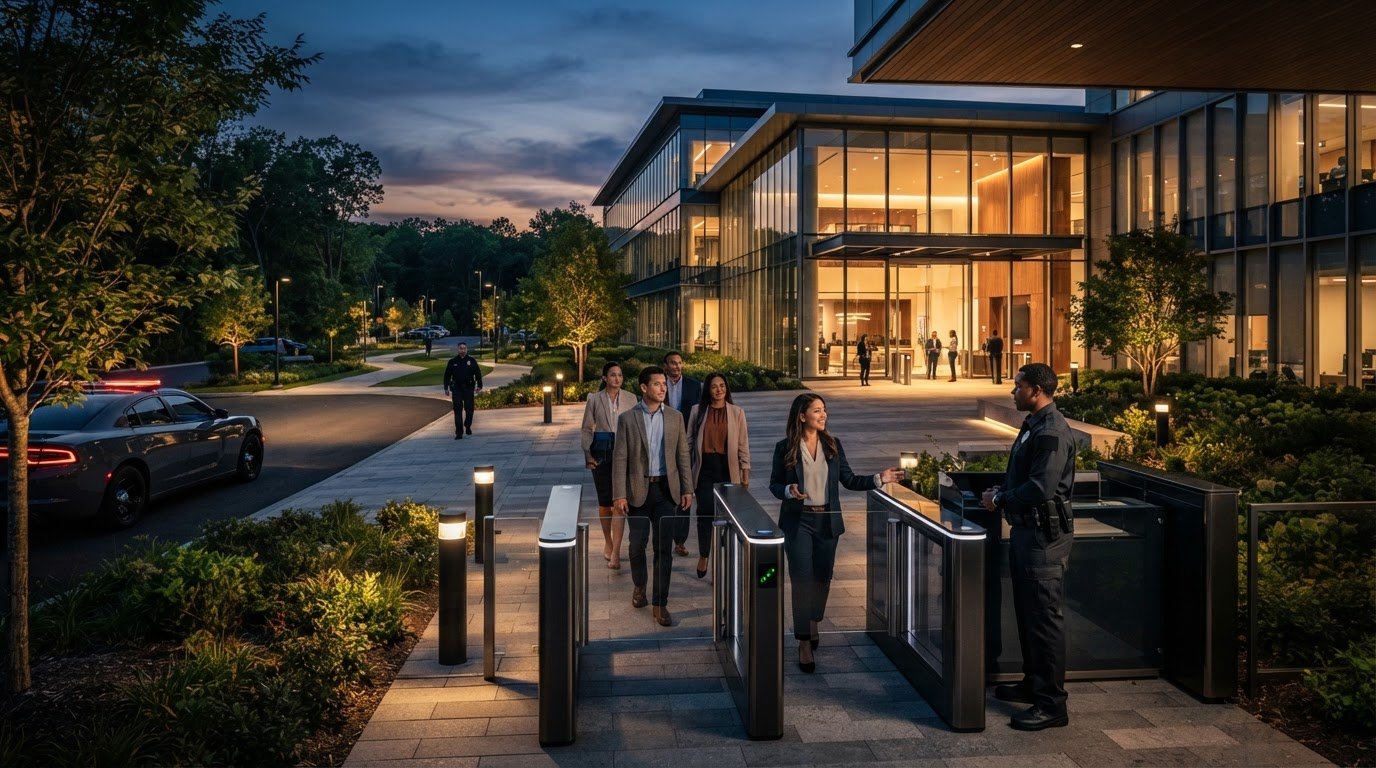
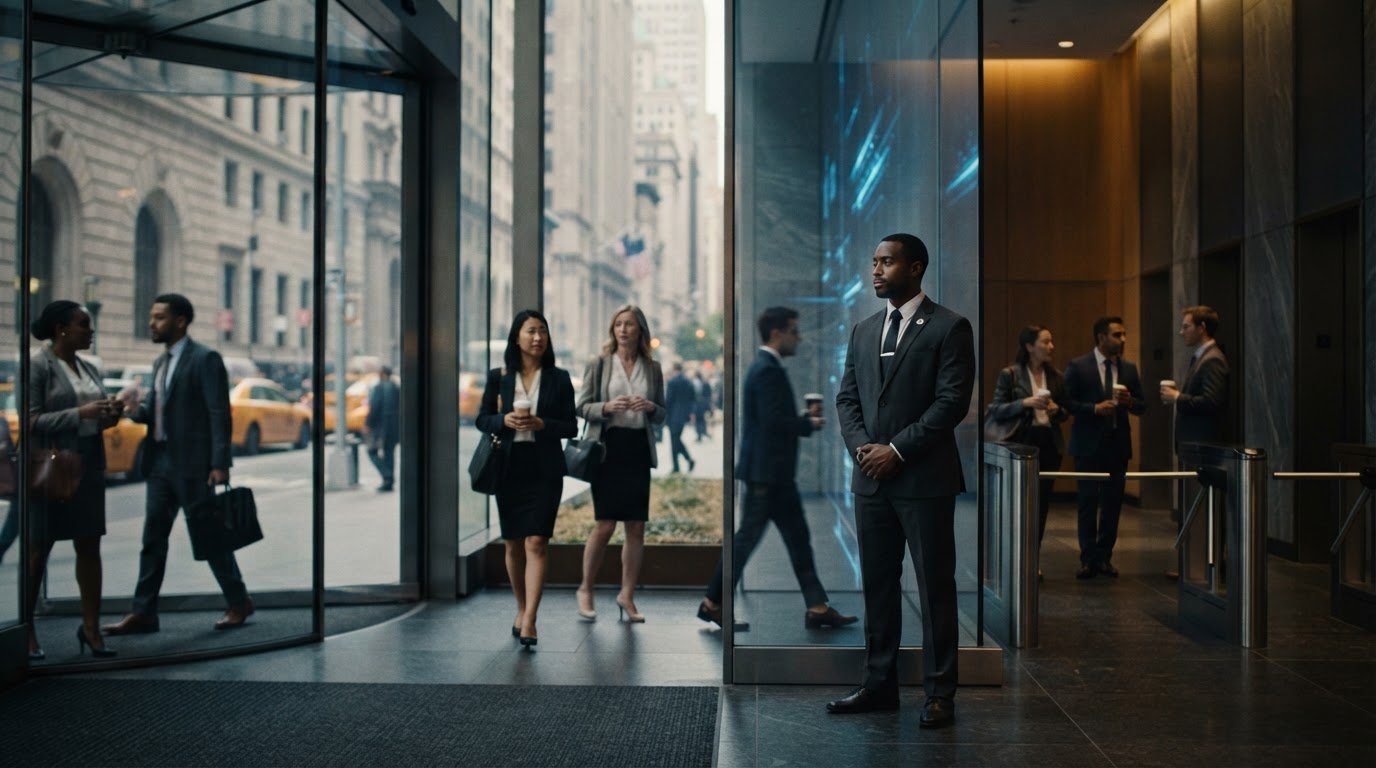
Tailgating happens when an unauthorized person follows someone through a secured door. Reduce the risk by asking residents and staff not to hold controlled doors for unknown visitors, and by directing guests to the front desk for verification. A receptionist or unarmed security officer can help manage the lobby and visitor flow. Set clear procedures for deliveries and emergencies as well.
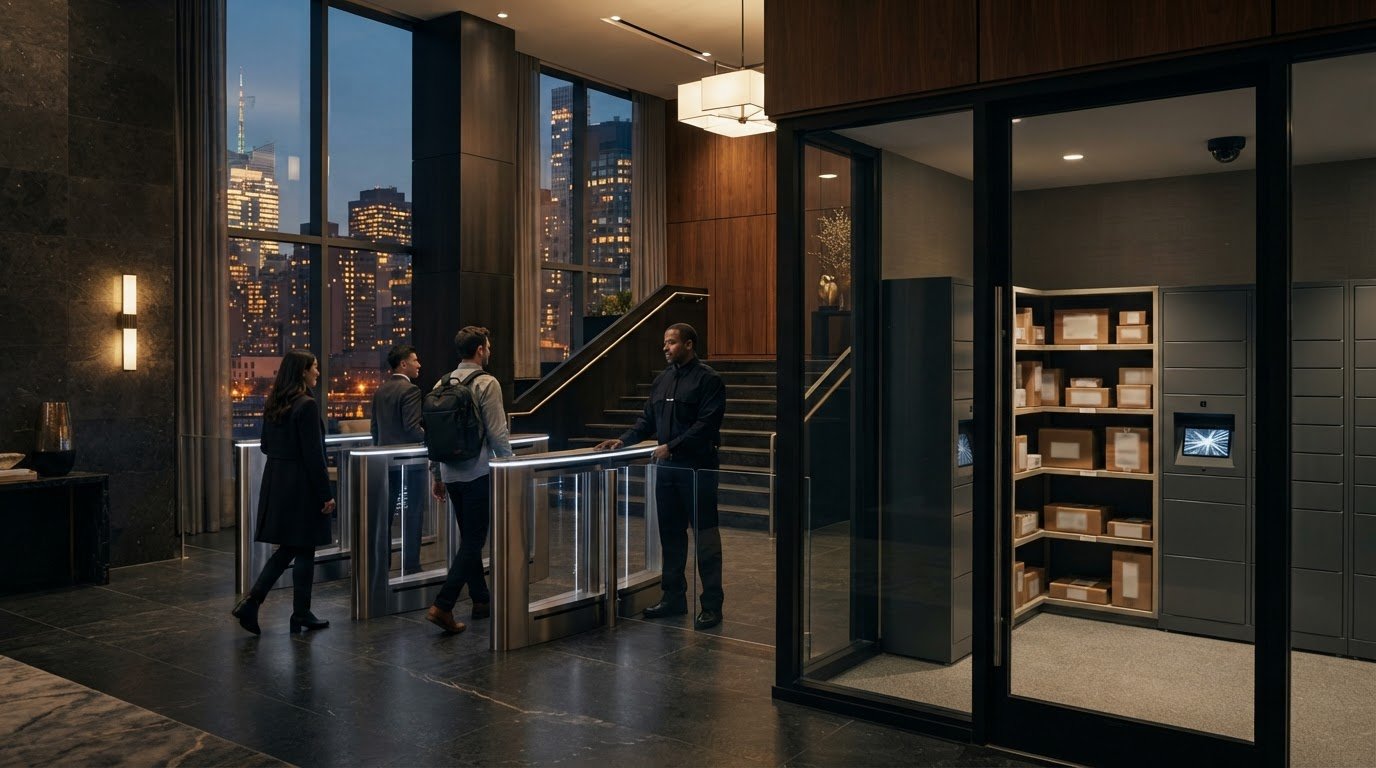
To strengthen front-desk, lobby, and package-room security, direct visitors to check in, record deliveries, and keep packages in a designated controlled area. A sign-in list or table behind the doorman desk can create a clear hand-off record. Pair working door locks with controlled entry and appropriate lighting, and promptly remove access for former residents or staff.
Upgrade costs depend on the number of doors, selected equipment, building layout, and installation requirements; pricing is determined by the project and provided after a quote request. For grants, rebates, or NYPD programs, confirm that a specific program covers the property and proposed work before including it in the budget.
2. Camera placement and privacy considerations
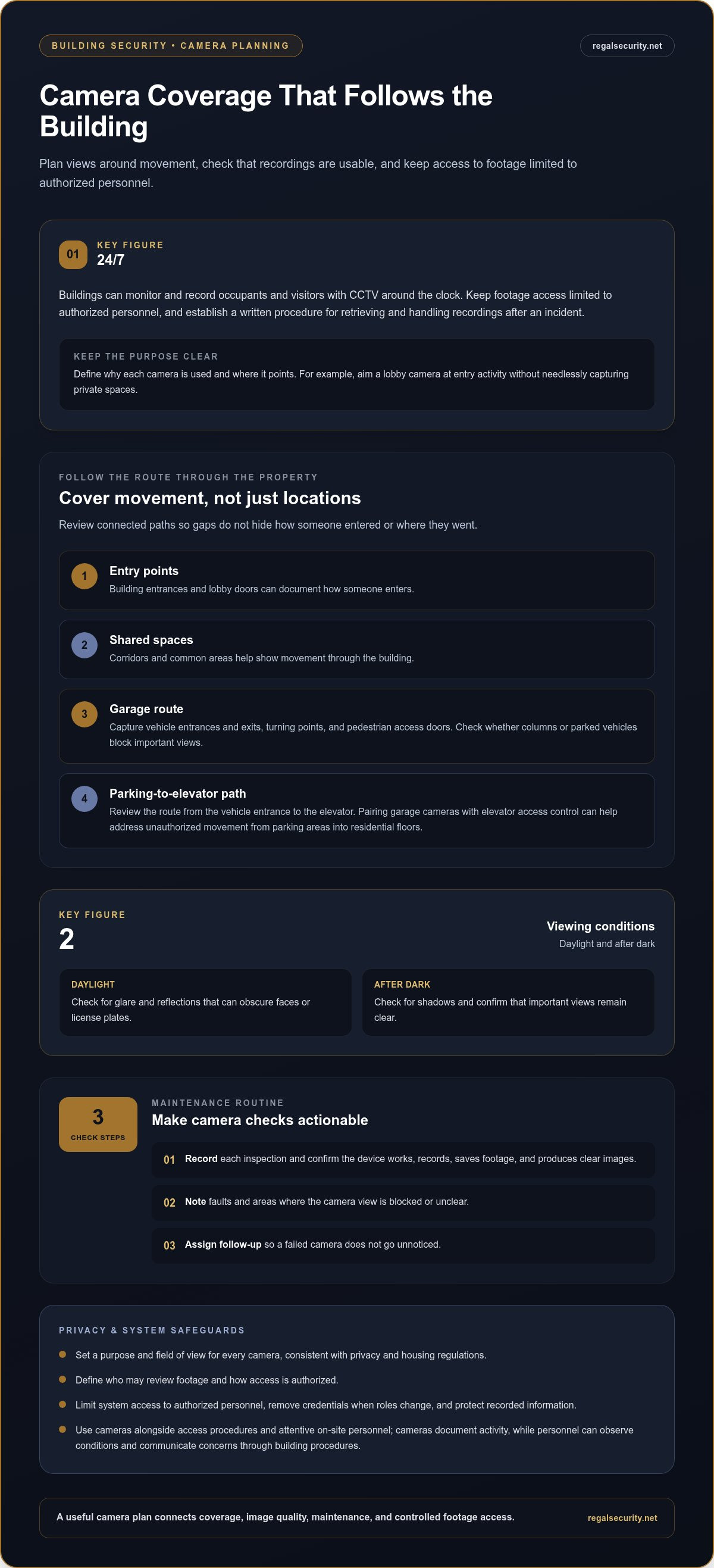
Place cameras to document movement through shared spaces, not simply because a location is available. Building entrances, lobby doors, corridors, and common areas can help show how someone entered and where they went. Visible cameras may deter unauthorized entry and help identify suspects, but work best alongside access procedures and attentive personnel. In a garage, position cameras to capture vehicle entrances and exits, then check whether columns or parked vehicles block important views.
For garage coverage, license plate cameras can record vehicles entering and leaving. Monitored garage CCTV should provide a clear view of each area, including turning points and pedestrian access doors. Pairing garage cameras with elevator access control can help address unauthorized movement from a parking area into residential floors. Review the route from vehicle entrance to elevator, not just individual camera images, to spot gaps in coverage.
Privacy matters in NYC apartment buildings. Security installations must comply with privacy and housing regulations, so define the purpose and field of view for each camera. For example, aim a lobby camera at entry activity without needlessly capturing private spaces. Establish who may review footage and how access is authorized. These limits protect residents’ privacy and keep camera use tied to a building security purpose.
Smart locks, cameras, and access systems can create cybersecurity and privacy risks if credentials or stored footage are exposed, or access is granted too broadly. Limit system access to authorized personnel, remove credentials when roles change, and set procedures to protect recorded information.
Maintenance checks show whether cameras can serve their intended purpose. Confirm that each device works, records, saves footage, and produces images clear enough to identify faces. Test views in daylight and after dark, since glare, shadows, and reflections can obscure faces or license plates. Include garage entrances, lobby doors, and other covered areas in a regular inspection routine. Record each check, note faults, and assign follow-up so a failed camera does not go unnoticed.
Buildings can monitor and record occupants and visitors with CCTV 24/7, while limiting footage access to authorized personnel. Set a written review procedure that explains who can retrieve recordings and how footage is handled after an incident. For real-time observation and in-person response, a building may pair its camera system with unarmed security officers. Cameras document activity; personnel can observe conditions on site and communicate concerns through building procedures.
3. Reporting safety issues to management and NYC 311
A written report creates a clear record when a building safety issue needs attention. Describe the location, condition, when you noticed it, and its effect on residents or workers. For example, report a lobby door that fails to lock by identifying the entrance and when it was found unsecured. Keep a copy of the message and any reply, then record whether the problem was resolved.
Send concerns about defective locks, broken entry doors, or failed surveillance equipment to building management in writing. Include a photograph when it helps show the condition, but avoid photographing people unnecessarily. If the issue remains unaddressed and concerns building code or safety, report it to NYC 311. Give a concise description and the building location so the concern can be directed appropriately.
In NYC buildings, access controls, locks, and security gates should not block or delay emergency exits. Before changing an exit door or gate, building management should review applicable fire-safety requirements and ensure occupants can leave safely during an emergency.
After-hours safety needs a clear reporting process. Employees working late can note poorly lit entrances, a closed lobby desk, or a door left unsecured after the building closes. Record the date, time, and exact location, then report the condition through the designated management channel. Building procedures should also explain whom staff can reach about an urgent safety concern outside normal business hours.
Use a consistent method to track reports. A log can include the issue, submission date, person or office notified, follow-up actions, and resolution date. For example, a residential building can track recurring failures at its side entrance separately from package-room concerns. This record helps management distinguish a one-time fault from a repeated vulnerability and assign an appropriate repair or operational response.
Fire and safety concerns need clear escalation. Promptly report obstructed exit stairs, malfunctioning alarms, or a door that prevents safe passage to management. Residents should check exit stairs regularly for locks, cleanliness, and obstructions. Security measures never replace safe egress. If a condition creates immediate danger, move away from the hazard and contact emergency services.
Guards and front-desk personnel can support reporting by recording observations, directing concerns to management, and following established emergency procedures. Surveillance may help document an incident, but a camera recording does not replace reporting a hazardous condition. For example, footage of a propped-open door can help establish when it happened, while a written report ensures management receives the concern and can act.
4. AI monitoring and alert response
AI monitoring can help a building review activity and flag events for human attention. Depending on the system, alerts may relate to movement in a restricted area, a door held open, or activity outside an expected schedule. Tenant reports about repeated access problems can help management decide which areas need closer review. AI is an analytical aid, not a substitute for clear response procedures or human judgment.
Alert quality depends on system configuration. Define which events warrant an alert, who receives it, and what action follows. For example, an alert about access to a restricted room might prompt a designated staff member to review available footage and follow the building’s incident procedure. A routine lobby movement alert may require no action. Clear thresholds help staff focus on significant events rather than treating every notification as an emergency.
Set a response sequence before enabling alerts. Identify who reviews each notification, how the decision is documented, and when the issue should be escalated. If an alert concerns a forced door, staff can assess the location, follow the building’s emergency plan, and record their observations. Alerts without assigned responsibility can go unattended.
AI can also help organize information from cameras and access systems, allowing authorized staff to review relevant events more efficiently. For example, an alert about a package-room concern may direct attention to a specific time and location. Limit system access to personnel with a defined role, and document how alerts and recordings are reviewed. This keeps tenant privacy and operational accountability in view.
Deloitte found that smart security technology cuts crime by 30% to 40% and reduces emergency response times by 20% to 35%. These findings describe reported effects of smart security technology, not a guaranteed outcome for every building. NYC managers can use them as context while evaluating how monitoring fits existing entry procedures, staffing, and incident plans. The building’s own vulnerabilities should guide which alerts matter most.
Review alert performance through scheduled checks. Record false alerts, missed events, response actions, and recurring locations, then adjust system settings and staff instructions. For example, repeated alerts near a busy delivery entrance may call for a revised detection area or clearer delivery procedures. Test the escalation process with a tabletop scenario, such as an access alert after the lobby closes, so everyone assigned understands the next step.
AI monitoring is most useful when a building can act on what it detects. Assign responsibility, document decisions, and connect each alert to a practical response. This structure helps staff respond calmly when an incident occurs while keeping monitoring proportionate to the building’s risks and operating needs.
5. Building security planning and risk assessment
A practical security plan starts with a property’s actual risks, not a preset equipment list. NYC multifamily buildings may have high foot traffic, delivery access, aging infrastructure, and shared responsibility among residents. Buildings with ten or more floors can also have complex routes between entrances, elevators, garages, and shared spaces. Map those routes first, then identify where unauthorized access or delayed emergency response could occur.
Walk the property in stages: approach, entrance, lobby, delivery area, elevator, stairs, and service spaces. At each point, record who needs authorized access, how entry is managed, and what happens if a door or system fails. For example, a delivery entrance may need a defined check-in process and an assigned person responsible for follow-up. Include observations from staff and residents, who may notice recurring issues through daily use.
A useful way to understand how to improve building security in NYC is to link each identified vulnerability to a proportionate action. A broken exterior lock may need immediate repair, while an outdated system update may call for planned technical work. Record the weakness, its potential consequence, the responsible person, and the next step. This helps managers prioritize work according to risk and available budget.
A building security consultation can include reviewing compliance with building codes and fire-safety regulations. Consider how access measures fit the property’s layout and emergency procedures, especially where controlled doors intersect with exit routes. Security measures should support safe movement, not obstruct it. Document decisions and keep relevant plans accessible to the people responsible for building operations.
Establish written protocols for security violations and emergencies. Specify how staff should report an unsecured door, who evaluates the concern, and how residents receive instructions. Include evacuation procedures and response plans for fires, medical issues, power outages, break-ins, and flooding. A tabletop exercise can test a scenario such as a power outage affecting building entry, revealing unclear responsibilities before an incident occurs.
Review the plan through periodic security audits. Inspect locks, access procedures, and system updates, then record defects and corrective actions. An audit might reveal a door that no longer latches or an update that has not been applied. Reassess after renovations, changes in building use, or recurring incident reports, since each may introduce vulnerabilities the previous review did not address.
For managers deciding how to improve building security in NYC, the central task is to turn assessment findings into assigned actions and regular reviews. On-site security support can be considered when the plan identifies a need for a consistent presence. Discuss security support for your building.
Regal Security: Unarmed Security Officers
Regal Security provides Unarmed Security Officers for buildings seeking a professional on-site presence. An officer can support established access procedures, assist with visitor flow, and communicate observed concerns through the building’s reporting process. This can be a practical next step when an assessment identifies a need for in-person observation or added support at an entrance.
Unarmed officers complement a building’s procedures and systems; they do not replace equipment maintenance, fire-safety planning, or management’s responsibility for building operations. Regal Security also offers Concierge Services, Vehicle Patrol, and Executive Protection for distinct security needs. Contact Regal Security to discuss your building’s security needs, or visit regalsecurity.net.
Put Your Building’s Next Step Into Action
A security plan is useful when responsibilities are clear. Choose one finding from your assessment, assign someone to address it, and set a date to review progress. This turns planning into an ongoing practice rather than a document that sits unused. As conditions change, such as a new entrance procedure or a shift in building use, revisit the plan and update responsibilities.
If you’re deciding how to improve building security in NYC, consider which needs call for an on-site presence and which involve visitor services or vehicle patrol. Regal Security offers Unarmed Security Officers, Concierge Services, and Vehicle Patrol. These services can complement existing building procedures and support specific operational needs.
Thoughtful security planning is built through deliberate choices and consistent follow-through. Contact Regal Security to discuss your building and take a confident next step toward a more considered security approach.
Frequently Asked Questions
What is Building Security?
Building security coordinates people, property, and access so routine activity can continue safely. It covers more than preventing entry: it also clarifies who handles a lost credential, an unexpected visitor, or an incident affecting residents. A useful test is whether residents, employees, and visitors can understand where to go and whom to notify without confusion.
Why Is It Important?
An unresolved security weakness can affect daily life as well as property. An unsecured door, for example, may concern residents, disrupt staff responsibilities, and complicate emergency response. Clear procedures help people act consistently instead of improvising under pressure. They also give building management a practical basis for deciding which concerns need immediate attention and which call for planned maintenance or changes to routine.
What are the most effective ways to improve security in NYC residential buildings?
Start by matching each measure to a specific concern, then make the process easy for residents and staff to follow. A building with frequent guest visits may need a clear visitor check-in routine, while a property with recurring delivery confusion may benefit from defined hand-off responsibilities. Local conditions differ across Manhattan, Brooklyn, Queens, the Bronx, Staten Island, New Jersey, Long Island, Nassau and Suffolk counties, Westchester, Rockland, and Orange counties.
What security cameras and video surveillance rules apply in NYC residential buildings?
Camera installations in NYC apartment buildings must comply with privacy and housing regulations. Start by documenting why each camera is used, which shared area it covers, and who may review recordings. For example, a building can distinguish footage needed to investigate an incident from routine access to recordings. Keep camera placement focused on its intended security purpose, and include footage handling in written procedures.
What are the best access control options for NYC apartment buildings, and how do they compare?
The right option depends on how residents and staff use the building. Cards are familiar and can be assigned to individuals; RFID credentials work through a scanner; biometric systems verify a physical identifier. Compare options by how easily management can assign, change, and remove access, and by how each fits the building’s entry routine. The system should support authorized movement without confusing everyday arrivals or delaying emergency egress.
What steps should NYC building managers take to assess security risks and create an emergency plan?
Managers can start with a written walk-through that records vulnerable locations, current procedures, and who is responsible for follow-up. Then map responses to likely disruptions, including a power outage, flooding, or a medical emergency. Use a tabletop exercise to test whether staff know who communicates with residents and where instructions are kept. Update the plan after a renovation or change in building operations, and document assigned actions.
What are NYC fire code rules for building access control, locks, and security gates?
Access controls, locks, and security gates must not block or delay emergency exits. Before changing an exit door or gate, management should review applicable fire-safety requirements and ensure occupants can leave safely.
How much do NYC building security upgrades such as cameras, intercoms, and access systems cost?
Actual project costs depend on the number of doors, selected equipment, building layout, and installation requirements; request a quote for project pricing.