Fashion Week Event Security for Manhattan Venues
The runway may command attention, but security for Fashion Week events in Manhattan must cover the entire venue. A considered plan controls backstage access, protects collections, manages guest and talent movement, coordinates with local precincts, and prepares for discreet celebrity arrivals.
A smooth show depends on more than what happens on the runway. Entrances, backstage areas, arrival points, and busy transitions all need clear oversight so protection supports the event without disrupting it.
Plan security around the Manhattan venue’s layout and schedule, from collection access and guest flow to talent movement and high-profile arrivals. On-site officers and concierge services can support a composed guest experience, while Executive Protection may suit talent or executives who need discreet attention. The key is to clarify roles, coordination, and procedures before the event.
Table of Contents
Backstage access control and collection protection
At Manhattan fashion shows and after-parties, key risks include unauthorized backstage entry, collection loss, crowd surges, and disrupted arrivals. The New York Public Library has hosted a Coach runway event, underscoring why plans should account for each venue’s entrances, sidewalks, loading points, and event routes.
Backstage Access Control
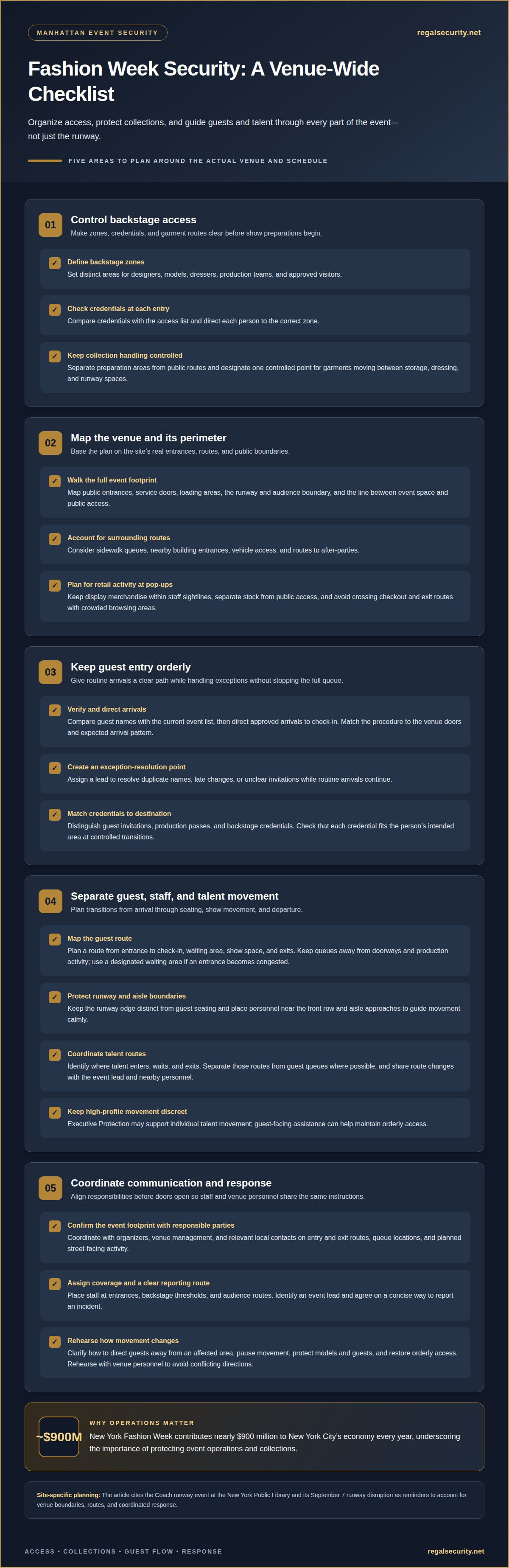
Divide backstage into clear areas for designers, models, dressers, production teams, and approved visitors. At each entry, staff can compare credentials with the access list and direct people to the correct zone. Separate collection preparation areas from public routes, and designate one controlled point for garments moving between storage, dressing, and runway spaces. These steps make unauthorized access easier to spot.
Venue and Perimeter Vulnerabilities
Assess the venue by mapping public entrances, service doors, loading areas, and the boundary between event space and public access. The Coach runway event at the New York Public Library illustrates why plans should account for the runway and audience boundary as well as backstage doors. At Manhattan sites, consider sidewalk queues, nearby building entrances, vehicle access, and routes to after-parties. Base the plan on the actual site, not a generic venue layout.
Pop-up stores add retail activity to collection protection. Establish a visible entrance, keep display merchandise within staff sightlines, and ensure checkout and exit routes do not cross crowded browsing areas. For example, a staff member near the store entrance can welcome visitors while observing movement around displays. Keep stock storage separate from public access, and set a clear process for moving garments between the sales floor and storage.
Crowd control and permit assistance begin with coordination among event organizers, venue management, and relevant local contacts. Confirm the event footprint, entry and exit routes, queue location, and any planned street-facing activity with the responsible parties. The September 7 Coach runway incident at the New York Public Library shows how an interruption can reach the runway itself. A site-specific plan should clarify who communicates changes and who manages guest flow.
For crowd control and crisis response, assign staff to entrances, backstage thresholds, and audience routes before doors open. Identify an event lead, agree on a concise way to report an incident, and establish how staff will direct guests away from an affected area. After the September 7 runway disruption, a response plan should account for pausing movement, protecting models and guests, and restoring orderly access. Rehearsing these steps with venue personnel helps avoid conflicting directions.
New York Fashion Week contributes nearly $900 million to New York City's economy every year, underscoring the importance of protecting event operations and collections across the show environment.
Fashion show guest, talent, and foot-traffic management
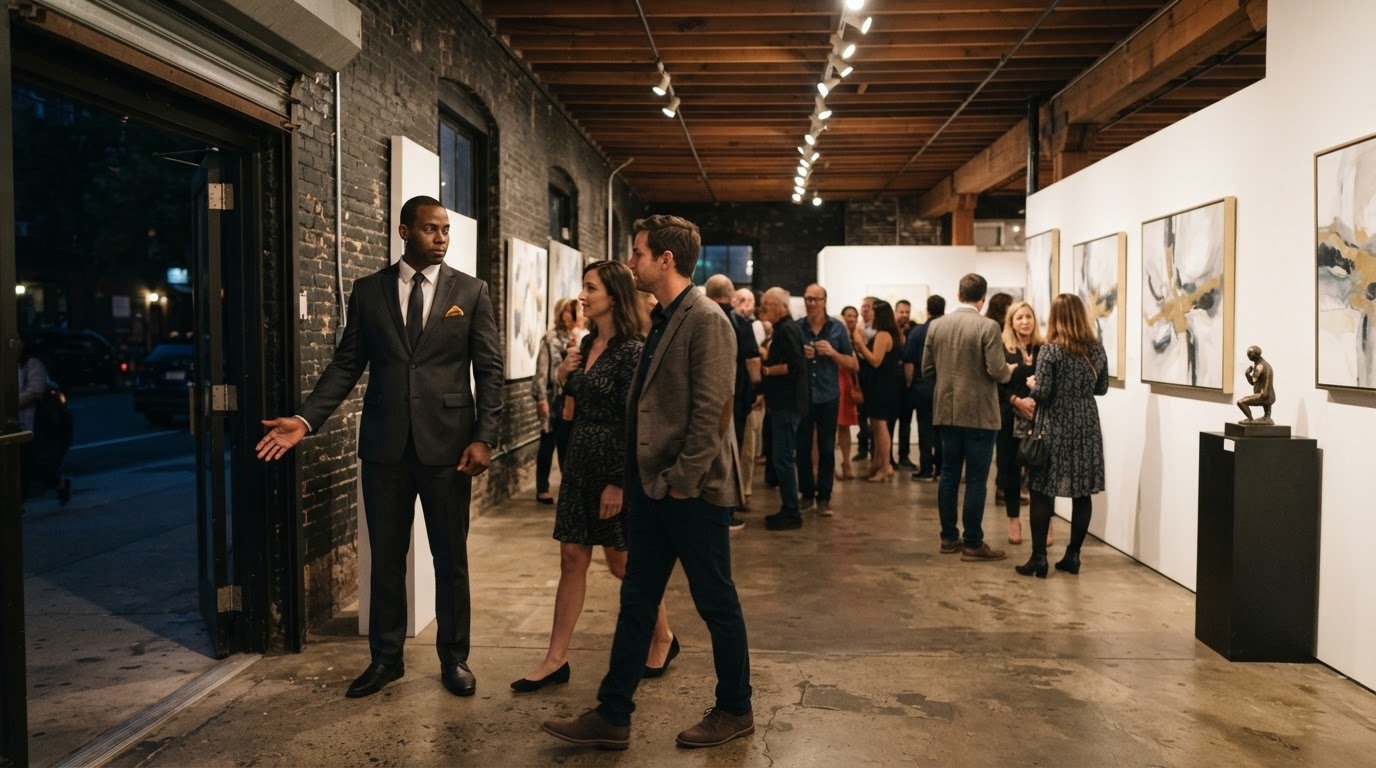
A Manhattan show brings invited guests, production staff, talent, and passersby into shared spaces. A clear arrival plan separates their routes, assigns entry responsibilities, and gives staff a consistent way to respond to delays or crowding.
Entry Screening and Guest Lists
At the entrance, trained staff can compare each guest’s name with the current event list, then direct approved arrivals to check-in. Keep a designated lead available to resolve duplicate names, late changes, or unclear invitations without stopping the full queue. For example, a separate resolution point lets routine arrivals continue while one staff member handles an exception. Entry procedures should match the venue’s doors and expected arrival pattern.
Guest and Staff Credentials
Use credentials that distinguish guests from staff and identify permitted areas. A guest invitation, production pass, and backstage credential are not interchangeable. At each controlled transition, staff can check that the credential matches the person’s destination. A dresser carrying garments to the preparation area needs access appropriate to that task, while a seated guest follows the audience route.
Plan guest movement from arrival through seating and departure. Map the route from the entrance to check-in, waiting areas, the show space, and exits. Keep queues away from doorways and avoid routing arriving guests through production activity. If an entrance becomes congested, staff should direct people to the designated waiting area rather than letting an informal second line form.
Front-row protection depends on clear boundaries and attentive staff placement. Keep the runway edge distinct from guest seating, and position personnel to observe movement near the front row and aisle approaches. If a guest stands, crosses a boundary, or blocks the aisle, staff can respond calmly and guide them back. The aim is to protect sightlines and movement without drawing unnecessary attention during the show.
Coordinate talent movement with the show schedule and venue route plan. Identify where talent enters, waits, and exits, then separate those paths from guest queues where possible. A designated staff member can communicate route changes to the event lead and nearby personnel, preventing conflicting directions. For celebrity arrivals, discreet Executive Protection can support individual movement, while guest-facing assistance helps maintain orderly access.
These measures work best when the event lead, venue team, and trained staff share the same instructions. Before doors open, clarify who manages the guest list, handles credential questions, and redirects foot traffic. Clear assignments help everyone manage their area without interrupting the show schedule or leaving an entrance unattended.
NYPD experience and coordination with local precincts
Security for Fashion Week events in Manhattan requires coordination between venue operations, event organizers, and appropriate local contacts. Clear communication aligns the event schedule, site boundaries, pedestrian movement, and response responsibilities.
Fashion Week security guards need relevant event experience, sound judgment, and the ability to communicate calmly with guests and venue teams. They should understand their assigned posts, escalation process, and how to report changing conditions to the event lead.
Before show day, the event planner can prepare a concise operating brief for the venue team and local contacts. Include the venue address, event hours, entry locations, expected arrival pattern, and any planned activity affecting the sidewalk or curb. Have one event contact handle updates so venue staff and security personnel receive consistent instructions. If the schedule changes, send the revision through that contact rather than relying on informal messages.
Handle permits and city-agency coordination according to the specific event footprint. The planner can determine whether the program uses only interior space or includes a street-facing installation, queue, or vehicle arrival area. Then coordinate with the venue and relevant city agencies about the proposed use and operational details. A private indoor show and an event affecting public space require different planning. Keep approved event materials with the operating brief.
Coordination with event planners works best when responsibilities are assigned before doors open. Identify who manages schedule changes, speaks for the venue, and communicates with local precinct contacts. If an arrival time shifts, for example, the event lead can relay the change to entrance staff, the venue contact, and the assigned security supervisor. A shared run-of-show keeps each team working from the same sequence.
To coordinate with a Manhattan precinct, organizers should use the appropriate official contact route and provide relevant event details. Share the venue address, hours, access points, and any planned activity that may affect nearby movement. Keep the exchange factual and direct. A precinct conversation does not replace the venue’s operational plan, but it can clarify communication and relevant local considerations. Record the contact person and any agreed follow-up in the event brief.
On event day, the security supervisor should confirm the current schedule with the planner and venue representative. Brief personnel on their posts, reporting method, and who can authorize changes. If a public entrance becomes congested, the supervisor can alert the planner and coordinate a route adjustment with venue staff. A clear communication chain supports orderly decisions without implying that private personnel direct NYPD operations.
Red carpet and celebrity arrival management
A red carpet concentrates arrivals, photographers, invited guests, and public attention in one place. A special-event plan should connect vehicle arrivals, carpet access, crowd boundaries, and the venue entrance.
Red-Carpet Crowd Control
Set a defined route from vehicle drop-off to the venue door, with a clear boundary between invited attendees and spectators. Position staff to observe the carpet entrance, queue edges, and crossing points. If photographers gather near the doorway, for example, a designated staff member can keep the passage open while directing guests to check-in.
Plan the arrival sequence with the event lead and venue team. Confirm where vehicles pause, who signals that an arrival is ready, and which entrance the guest will use. Keep the route clear of equipment cases and unrelated foot traffic. If the curb becomes congested, staff should contact the event lead and follow the agreed alternate approach rather than improvise a new route.
Celebrity arrivals also benefit from discreet coordination. A designated contact can communicate timing changes to the venue team without broadcasting private details across the event floor. Executive Protection may suit an individual who needs dedicated movement support, while concierge service can guide invited guests through the public-facing arrival process.
Security Guard Type Selection
Choose an approach based on the event’s risk assessment, venue plan, and desired guest experience. Visible, unarmed personnel can manage entrances and provide directions; plainclothes personnel may suit discreet observation when their role and reporting line are clear. Armed security is a distinct approach, not an automatic requirement for a red carpet. Match personnel and visibility to the assignment.
Event security pricing depends on the assignment and is provided after a quote request. Staffing pattern, assignment length, venue layout, and event schedule shape the estimate. A per-guard or hourly figure alone may not reflect the work required for arrivals, crowd boundaries, and the venue’s operating plan.
Before doors open, brief the assigned team on guest routes, arrival signals, crowd boundaries, and escalation contacts. Give the venue representative and event lead the same instructions. If an arrival runs late, the lead can update relevant staff discreetly, keeping the carpet route ready without drawing guests toward a closed entrance.
After the final arrival, maintain the carpet boundary until the event lead confirms the transition. Then direct remaining guests through the planned entrance and keep the vehicle area clear for departures. This closing step helps the venue move from arrivals to the next part of its program in an orderly way.
Fashion Week security
Fashion Week security should reflect the event’s full operating plan, from setup through guest departure. The right coverage depends on the venue, schedule, access points, and responsibilities assigned to each team.
Fashion Week Security Service Needs
Manhattan Fashion Week events typically need coverage for entry, guest direction, backstage boundaries, public-facing queues, and vehicle arrivals. Identify each post and the person responsible for handling changes. A venue with a pop-up retail area, for example, may need staff monitoring customer movement separately from personnel managing show access.
Match security services to specific tasks instead of choosing a generic package. Unarmed officers can support access control and provide an on-site presence, while concierge services can guide guests and handle arrival questions. The event lead should also define how staff report an incident and who can adjust assignments as the schedule changes.
Build the operating plan around the venue’s actual layout. Mark public entrances, restricted areas, loading access, and guest routes on the floor plan used by the venue team. Walk through likely transitions, such as moving from check-in to seating or reopening an area after the show. A written post plan helps everyone understand their assignment.
Security Booking Lead Time
There is no single booking interval for every New York Fashion Week event. Begin planning as the venue, event schedule, expected attendance pattern, and required posts take shape. These details determine the staffing plan and allow time to coordinate responsibilities with venue personnel and event planners.
A fixed venue with an established run-of-show may require a different planning process from a pop-up event with changing access arrangements. Share the site plan, event hours, guest flow, and arrival requirements when requesting a proposal. If any details change, update the security lead so assignments and instructions stay aligned.
For a multi-part event, such as a runway presentation followed by a reception, plan coverage for every transition. Specify when guests move, which spaces open, and who communicates schedule changes. This sequence helps determine whether coverage stays at one post or shifts as the event moves through the venue.
Regal Security’s event security planning can help organizers align on-site coverage with venue access, guest service, and event timing.
Budgeting should be part of the post plan, not a separate last-minute decision. A typical fashion-show security arrangement involves about six guards working six-hour shifts, costing about $3,200. These figures offer a planning reference, while the actual assignment should still reflect the venue, guest flow, and duties required. Organizers can use the estimate to compare proposed coverage with the posts and hours identified in their operating plan, then clarify what changes would affect staffing.
The Ralph Lauren show incident also shows why access procedures and a clear response process matter. Chad Busto, 43, was charged with criminal trespassing and disorderly conduct after the Ralph Lauren show incident. Keep entry instructions consistent, make responsibility for escalating concerns clear, and ensure staff know how to communicate changes without disrupting guest movement.
Regal Security
Regal Security helps Fashion Week organizers align on-site security with venue access, guest movement, and event schedules. Its Unarmed Security Officers and Concierge Services can support orderly entry and guest assistance, while Vehicle Patrol and Executive Protection address other event-specific needs. This is a practical next step when you need coordinated security that respects operational requirements and the guest experience.
Share the venue layout, event schedule, arrival plan, and priority areas to shape security around the occasion. Contact Regal Security to discuss security for your Manhattan Fashion Week event.
Plan the Next Step
As your venue and schedule take shape, turn security planning into clear operational priorities. Define who needs protection, how guests should be received, and which movements need coordination. These details provide a practical basis for matching security for Fashion Week events in Manhattan to your event format and guest experience.
Regal Security offers Unarmed Security Officers, Concierge Services, and Vehicle Patrol to support different on-site needs. The right combination depends on your event’s responsibilities and setting. A planning conversation can help align those needs with a composed, professional presence.
Before the event, bring your schedule, venue details, and priority areas together in one planning brief. This shared reference can keep your event team aligned as preparations develop while preserving the atmosphere your guests expect.
Contact Regal Security to discuss your Manhattan event security needs. With a considered plan and clearly assigned support, your team can move forward with confidence.
Frequently Asked Questions
How can organizers plan VIP, designer, and model access control and backstage security?
Use a role-based access plan that connects each person’s purpose with the spaces they need. Before the event, designate an event contact to approve changes, such as a designer bringing an additional assistant backstage. For a model moving from makeup to the runway, assign a discreet liaison to coordinate timing with production. Document exceptions so staff can resolve access questions consistently without interrupting preparations.
What emergency, evacuation, and medical response plans should Fashion Week venues have?
Agree with venue management on decision authority, communication methods, exit routes, and a meeting point before the event. Identify who announces an evacuation and who directs guests away from a blocked route. Keep a path clear for medical responders, and establish who contacts them and guides them inside. For events in Manhattan, Brooklyn, Queens, the Bronx, Staten Island, New Jersey, Long Island, Nassau, Suffolk, Westchester, Rockland, or Orange County, prepare a site-specific plan for each venue.
How much does event security cost in Manhattan per guard or per hour?
A typical arrangement uses about six guards for six-hour shifts and costs about $3,200. Security spending can cover setup, the show, and breakdown afterward.
Which Manhattan neighborhoods and venues commonly host Fashion Week events, and what local security issues apply?
The New York Public Library is a cited Manhattan venue, but no neighborhoods are named. Local concerns include sidewalk queues, nearby building entrances, loading areas, vehicle access, and routes to after-parties.