After Hours Security Patrol in NJ for Property Checks
The right patrol schedule is built around the property, not a fixed number of visits for every site. An after-hours security patrol in NJ may include one or more visits during an approved service window, with visits scheduled or randomized. Frequency depends on property size, location, risk, operating hours, route feasibility, reporting needs, and budget.
It’s understandable to want a clear picture of what happens while a property is quiet or closed. A patrol plan can define the service window, visit frequency, checkpoints, reporting, contacts, and response limits, so checks reflect the site’s needs rather than a generic routine.
This article explains what officers can inspect, how mobile patrol differs from a guard at a fixed post, and which properties may suit after-hours, overnight, or weekend coverage. It also explains how to assess patrol frequency and the details that shape a practical plan.
Table of Contents
Property types suited to mobile patrol
An after-hours security patrol in NJ can suit properties with multiple exterior areas to check. Commercial buildings, warehouses, residential communities, and sites with parking lots may benefit from visits along defined routes. This approach is practical when a property needs periodic checks rather than an officer stationed at one post.
Consider a commercial property with a rear loading zone, side entrances, and a parking area. A vehicle patrol can check assigned points across these locations during a service window. Residential communities may need attention around vehicle entrances, shared parking, or separate buildings. The site layout helps determine which locations belong on the route.
Mobile and stationed coverage serve different purposes. A mobile patrol officer checks assigned areas and documents visits, while a stationed guard remains at a defined post during a shift. A property with dispersed buildings may suit mobile checks; a busy entrance needing a consistent on-site presence may call for a stationed officer. The difference is the officer’s assigned position and movement.
Concierge security can suit a property where the entrance experience matters alongside security. In a residential building, concierge personnel can support access management and visitor-facing service, while mobile patrol checks exterior areas. These approaches address different parts of a site. A property can assess whether it needs a welcoming presence, perimeter checks, or both.
When choosing an after-hours patrol company, look for a clear site plan, defined checkpoints, visit timing, reporting procedures, and stated response limits. These details help align the assignment with the property’s layout and operating hours.
In New Jersey, coverage options include vehicle patrol, stationed unarmed security officers, and concierge security. The right format depends on whether the priority is moving between checkpoints, maintaining a fixed post, or supporting an entrance.
To arrange coverage, map the property, identify access points and priority areas, then define service windows and reporting needs. For example, a warehouse manager can mark gates, loading zones, and office doors for the patrol route.
Coverage within New Jersey depends on the property’s location and route feasibility. A Jersey City site in Hudson County, for example, has a distinct location to consider when planning visits and checkpoints.
Liability and insurance risks can arise when the agreed patrol scope, access permissions, or incident reporting process is unclear. Review these items alongside insurance documentation and define what the patrol assignment covers. A written plan helps distinguish scheduled checks from responsibilities assigned to on-site staff.
Overnight warehouse and perimeter patrols
Overnight warehouse checks can focus on areas that matter after operations close. A route may cover exterior doors, gates, loading zones, and parking areas. Officers can make scheduled or randomized visits during an approved service window. The plan should specify which locations need attention and how visits are documented.
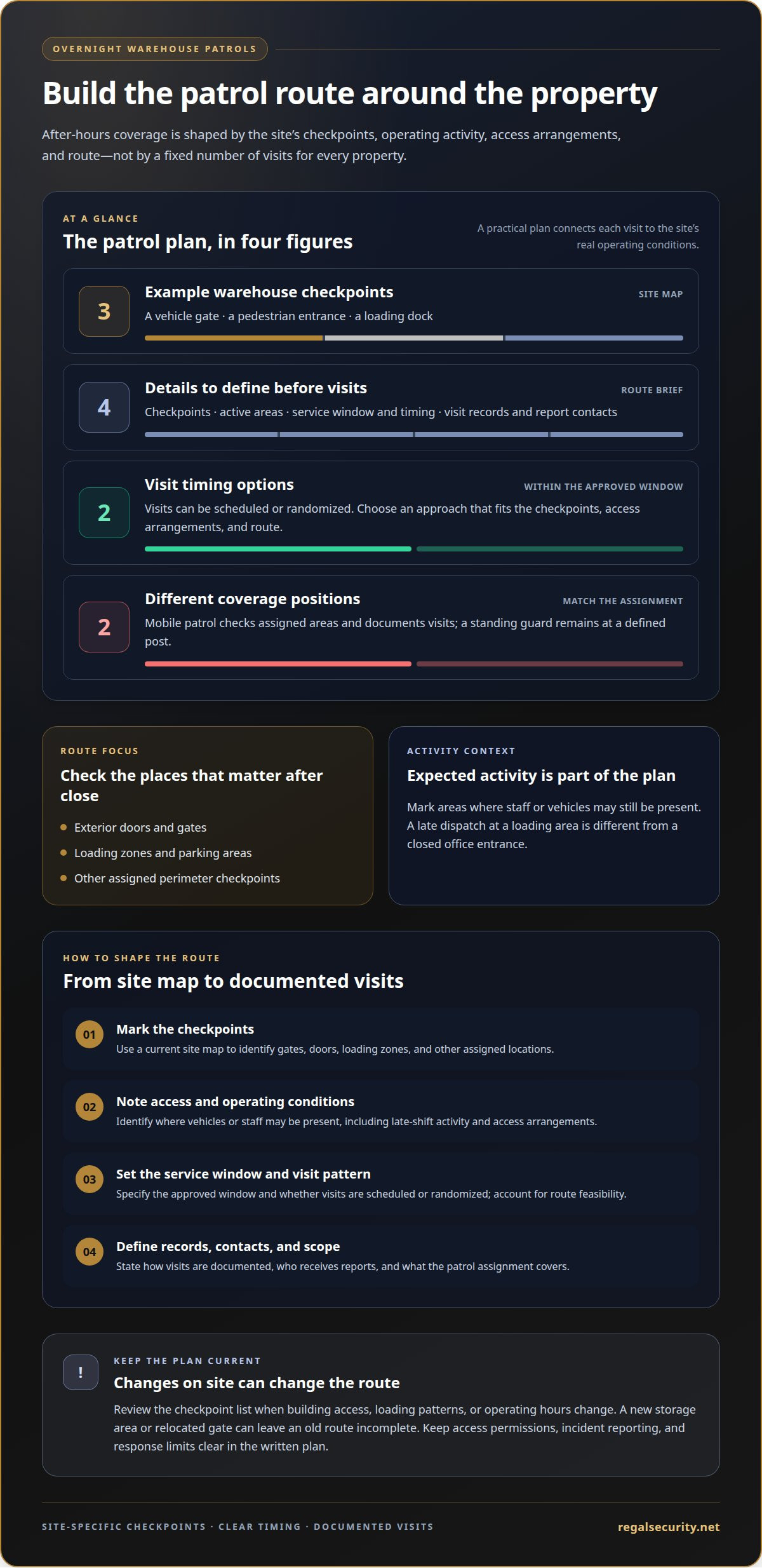
Start with a site map and mark each checkpoint clearly. For example, a warehouse manager might identify a vehicle gate, a pedestrian entrance, and a loading dock. The route can connect those locations in an order officers can follow. Clear checkpoints keep visits focused and make records easier to understand.
Perimeter coverage also benefits from distinguishing routine checks from priority areas. A boundary gate may need attention because it controls vehicle access, while a side door may be used by staff on a late shift. A plan can note each location’s purpose, expected access, and route constraints. This context helps officers recognize when an observed condition differs from normal site activity.
Before setting the visit pattern, identify the operational details that affect a warehouse route:
List gates, doors, loading zones, and other assigned checkpoints.
Mark areas where vehicles or staff may still be present.
Define the service window and whether visits follow scheduled or randomized timing.
Set out how visits are recorded and which contacts receive reports.
These steps make the plan specific to the warehouse rather than a generic perimeter loop. For instance, a loading area in use during a late dispatch should be treated differently from a closed office entrance. Sharing operating hours and access arrangements helps distinguish expected activity from unusual conditions. Route feasibility matters too, since the property layout shapes which checkpoints can be visited efficiently.
Mobile patrol officers check assigned property areas and document their visits. They do not remain at one fixed post throughout a shift. A standing guard, by contrast, stays at a defined post. A warehouse with several exterior checkpoints may suit mobile visits, while a location needing a continuous presence at one entrance may require a different arrangement.
Review the route when building access, loading patterns, or operating hours change. A new storage area or relocated gate can make an old checkpoint list incomplete. A concise site plan should show the current route, priority locations, service window, and reporting contacts. For help shaping warehouse patrol planning, begin with those site-specific details.
New Jersey mobile patrol plans can use scheduled or randomized visits rather than keeping an officer at one fixed post. When choosing an approach, consider which checkpoints need predictable coverage and where variation better fits the route. Align the selected approach with the approved service window and site access arrangements, so officers can complete assigned visits without confusing expected activity with changing conditions.
A useful review checks that each checkpoint remains accessible and the route still reflects current operations. If a location’s purpose or access pattern changes, update the route notes and reporting details so each visit can be understood in context. A clear plan helps officers focus on assigned areas and gives site contacts a consistent record of completed checks, without implying a continuous presence throughout the property.
Perimeter, parking, and access-point checks
A useful patrol route starts with an approved site plan. It identifies accessible checkpoints officers are assigned to inspect, such as doors, gates, parking areas, and loading zones. For a retail property, that might mean checking the rear service entrance, vehicle gate, and employee parking area. Identify each checkpoint clearly rather than treating the entire perimeter as one location.
List the property’s entry points before deciding the route. A manager might mark the main entrance, side doors, delivery access, and gates. Note which locations remain in use after closing, too. A loading-zone door used by a late crew needs different context from a locked office entrance. These details help officers understand the site’s normal activity.
Define the boundaries of parking areas as well. A large lot may include staff spaces, visitor parking, and a separate delivery lane. Identify the areas included in the assignment, then mark how they relate to nearby doors and gates. If a checkpoint is behind a building or beyond a controlled gate, include clear directions in the site plan.
A practical preparation sequence keeps the instructions precise:
Mark every assigned door, gate, parking section, and loading zone.
Identify areas that remain active during the patrol window.
Show route access points and note any restricted areas.
Record the property’s municipality and county for clear site identification.
Set out how visits and relevant observations should be documented.
For example, a business park may have several buildings with separate entrances. Its plan can name each building and connect the assigned door to the relevant parking section. This is easier to follow than broad instructions such as “check the north side.” Location-specific labels also reduce confusion when similar doors appear across a campus.
Patrol frequency depends on property size, location, risk, operating hours, route feasibility, reporting needs, and budget. A compact site with a few accessible checkpoints differs from a broad property with several separated lots. The visit plan can use scheduled or randomized timing during an approved service window. The priority is to match the route and visit pattern to the site’s actual layout.
Review the checkpoint list whenever the property changes. A newly used loading entrance, relocated gate, or closed parking section can make existing instructions inaccurate. The manager can update the site plan, clarify which locations remain assigned, and revise access notes. Clear records of visits also help distinguish completed checks from checkpoints that were inaccessible during a particular round.
Security guard duties and patrol responsibilities
A mobile security guard checks assigned areas and records each visit. At a New Jersey commercial site, this may include doors, windows, gates, and parking areas. The officer observes conditions, notes exceptions, and follows the approved site plan. For example, an open gate can be recorded with its location and time. Clear assignments distinguish a completed property check from an unplanned walkthrough.
Mobile patrol differs from a guard at a fixed post. A mobile officer moves among checkpoints, while a stationed guard remains at a defined post during a shift. A business with several buildings may assign mobile checks across its grounds. A lobby needing a continuous presence may instead require a fixed-post assignment. Duties depend on the location and coverage plan.
Mobile patrol responsibilities focus on assigned property checks and visit documentation. The plan can identify which doors or gates to inspect, which areas are accessible, and how observations should be recorded. A warehouse route, for instance, might include exterior entrances and a loading area. Written instructions also give officers context, such as which entrances staff use during late operating hours.
New Jersey security guards must meet state credential requirements. Unarmed security officers must complete a 24-hour SORA course from a certified instructor. Unarmed SORA certification must be renewed every two years after an 8-hour refresher, according to New Jersey State Police. These credential steps are distinct from the site-specific duties assigned during a patrol.
There is no single response time that applies to every alarm. Response timing depends on the patrol location, route, current assignment, access conditions, and the response limits defined in the service plan. A property can specify alarm contacts and escalation procedures in advance. These details clarify who receives notice and what actions fall within the patrol assignment.
For a clear assignment, property managers can define:
The doors, windows, gates, and other areas officers must check.
Which entrances remain active during the patrol window.
How officers document completed visits and notable conditions.
Who receives reports or alarm-related communications.
What response limits apply to the patrol assignment.
For example, a commercial manager can identify a side entrance used by evening staff and a separate delivery gate. Route instructions can explain their expected use and the reporting process. If a visit reveals an unusual condition, the officer documents it and follows the stated procedure. Specific instructions make responsibilities clearer for property staff and patrol officers.
Route instructions can explain the separate purpose of each access point and how it should be checked. Security guards patrol industrial or commercial premises in New Jersey to look for signs of intrusion and check the security of doors, windows, and gates. Tying these checks to the assigned route clarifies the patrol’s scope. Documented observations show whether specified access points were inspected and signs of intrusion were noted.
After-hours, overnight, and weekend coverage
A mobile patrol plan can define service windows for periods when buildings are closed or less active. For a New Jersey office property, that could mean specifying evening, overnight, or weekend hours. The plan can include one or more visits during each approved window. Visit timing may be scheduled or randomized, depending on the agreed approach.
Start by identifying when normal activity at the property changes. A warehouse may continue loading after office staff leave, while a commercial building may close fully overnight. A weekend schedule might differ from weekday coverage if deliveries, maintenance, or tenant access continue. These operating details help set checkpoints and clarify what activity officers should expect during each window.
Visit frequency should reflect the site, not a standard template. Property size, location, risk, operating hours, route feasibility, reporting needs, and budget all affect the plan. A compact office with one entrance presents different route needs from a campus with separate buildings and parking areas. Planned frequency should also account for the time needed to reach assigned checkpoints.
Before agreeing on a coverage schedule, organize the essential details:
Define the service windows, such as evenings, overnight periods, or weekends.
Identify how many visits should occur within each approved window.
Choose scheduled or randomized visit timing.
List the assigned buildings, access points, and priority checkpoints.
Set reporting procedures, contacts, and response limits.
These decisions work together. For example, a weekend window covering several buildings may require a route that accounts for gates and accessible entrances. A scheduled visit can suit a specific operational handoff, while randomized timing can vary the visit pattern. In either case, the plan should state which checkpoints are assigned and how completed visits are documented.
Review the schedule after changes to operating hours, tenant access, or the property layout. If a building begins weekend operations, update the relevant window and note which entrances remain active. If construction blocks a route, revised instructions can identify accessible checkpoints. Keeping the plan current aligns visits with actual site conditions and reporting expectations.
To prepare, gather the operating calendar, a site map, checkpoint priorities, and reporting contacts. These details give the patrol plan a practical foundation without assuming every property needs the same pattern. Discuss after-hours patrol coverage for a schedule shaped around your property’s buildings and operating windows.
Regal Security: Unarmed Security Officers
Regal Security provides Unarmed Security Officers and Vehicle Patrol for properties that need an assigned on-site presence or mobile checks. Unarmed officers suit a defined post, while vehicle patrol can cover assigned property areas through planned visits. For buildings that also need a visitor-facing entrance presence, Concierge Services can fit the operational need.
Share the property’s operating hours, priority areas, access points, and reporting needs when discussing coverage. These details help shape an assignment around the site rather than a generic routine.
Contact Regal Security to discuss your property’s security needs, or visit regalsecurity.net.
Make the Next Step a Clear Coverage Plan
A useful next step is to turn your property’s priorities into a practical assignment. Decide who will coordinate site instructions, receive patrol reports, and communicate changes to access or operating hours. This gives an after-hours security patrol in NJ a clear point of reference, especially when building use or staff schedules change.
Before discussing coverage, gather the details that will guide decisions: the property’s current access arrangements, its priority areas, and the information management needs after each visit. A concise, current plan helps keep expectations aligned as the site changes. It also gives your team a sound basis for reviewing whether coverage still fits.
Regal Security can discuss patrol coverage in relation to your property’s needs. Contact Regal Security about patrol coverage to take the next step toward a considered plan for your site.
Frequently Asked Questions
How often can patrol officers check a property?
Patrol visits can be arranged as one or more visits within an approved service window. Suitable frequency depends on property size, location, risk, operating hours, route feasibility, reporting needs, and budget. For example, a multi-building site may need a route that allows time for separated checkpoints, while a compact property has different route needs. Visit timing can be scheduled or randomized.
Which NJ security patrol companies offer 24/7 or overnight service?
Regal Security offers Vehicle Patrol in New Jersey. Its management team is available 24/7, which is distinct from a patrol schedule. The company’s local focus includes New York City, New Jersey, Manhattan, Brooklyn, Queens, the Bronx, Staten Island, Long Island, Nassau County, Suffolk County, Westchester County, Rockland County, and Orange County. A useful overnight plan defines its service window, assigned checkpoints, visit pattern, and reporting process.
How do mobile patrols compare with on-site security guards in NJ?
Mobile patrol suits properties where attention must move among separate locations; an on-site guard suits a post requiring a steady presence. For example, a campus might use mobile checks between outlying buildings while assigning an on-site guard to its main entrance. The choice depends on whether the priority is coverage across dispersed areas or consistent attention at one location. Some properties may need both roles for distinct purposes.
What liability and insurance risks apply to security patrol services in New Jersey?
Liability and insurance risks can arise when the agreed patrol scope, access permissions, or incident reporting process is unclear. Review insurance documentation and use a written plan to define what the patrol assignment covers.